Fan-Lit

Welcome Everyone!

Welcome Everyone!

Thanks for visiting my blog where I review books and stories. I am a published author and I have a Master's Degree in English and Creative Writing. Some of my favorite books are "The Hunger Games" series, the "Percy Jackson and the Olympians" series and Brandon Sanderson's "Skyward" series. I love to read and write short stories; as well as discuss writing and literature in any medium. Hope you enjoy and feel free to comment and make recommendations.


Monday, March 25, 2019

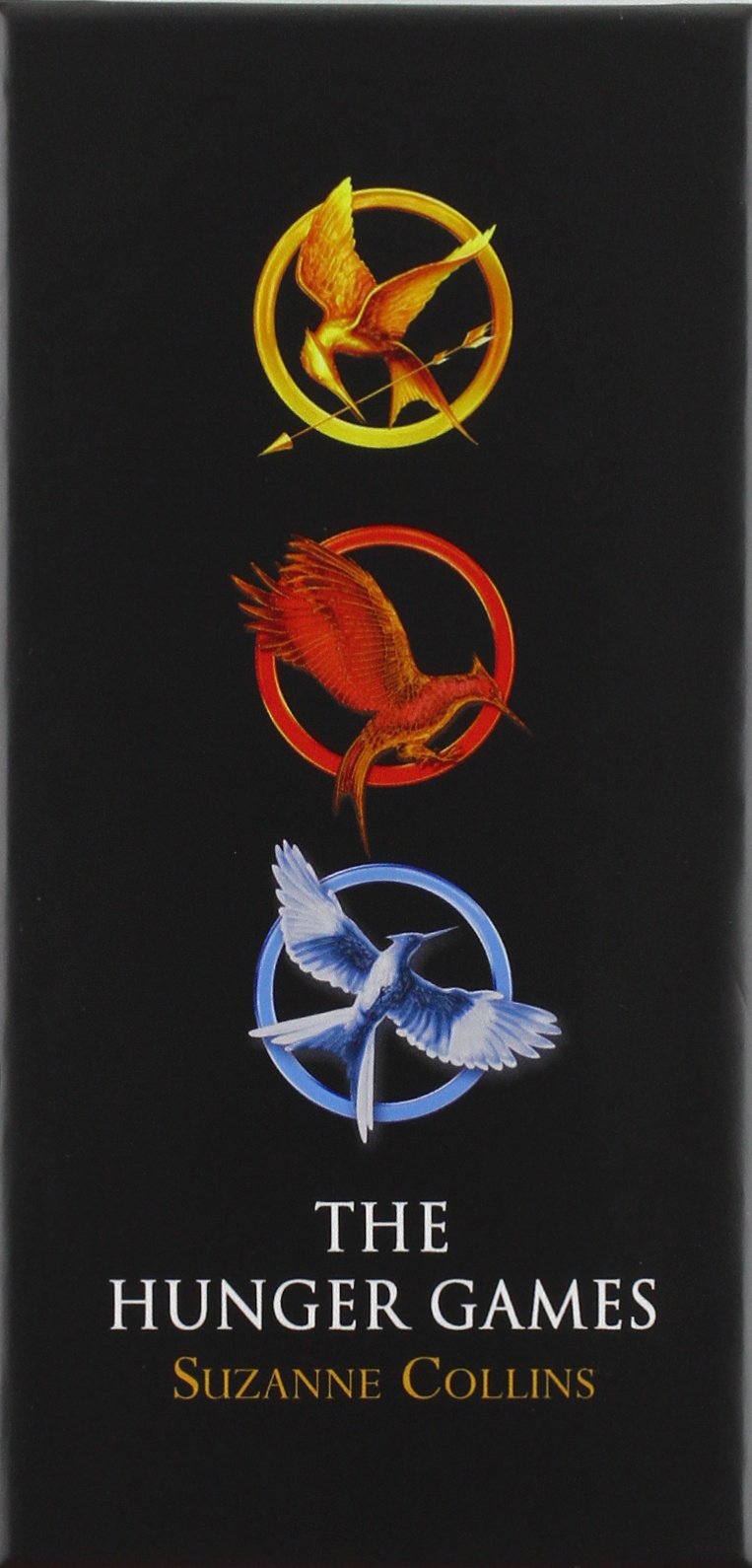
Suzanne Collins and The Hunger Games


In honor of Women's History Month, I thought I would talk about one of my favorite female authors, Suzanne Collins. Her trilogy The Hunger Games is my favorite book series ever. I also adore the movies. I won't give a full review of the books here, but I just wanted to talk about how much I love what Collins has accomplished as a writer. Collins started off as a television writer for Nickelodeon in the 1990's, working on shows like Clarissa Explains it All and Little Bear. All shows that I used to watch when I was a young kid. She went on to write children's books (and continues to do so), before transitioning into young adult/adult fiction. In 2008 she hit big with The Hunger Games, and just four years later it was turned into a successful film series starring Jennifer Lawrence as the book's heroine, Katniss Everdeen. While I do love the movies, the books do a better job of building the world of Panem in which Katniss lives in, based on a futuristic North America. Collins does a great job bringing the world of Panem alive, and I wish she would write more stories set in that universe. Katniss is one of my favorite heroines in fiction and made me want to learn how to shoot a bow and arrow (I still haven't). The Hunger Games movie came out the same year as The Avengers movie which also featured an archer, and the popular CW show Arrow premiered around that same time as well. Leading to an interest in heroes and heroines that shoot bows. For instance, a certain redhead on the CW show Riverdale was revealed to be an excellent shot with a bow. 


One of the things that I love about Katniss' story is that while she does have two love interests, in the books it's not really a matter of her choosing between them (it's played up more in the movies). Katniss' whole journey and motivation is her sister Prim. Everything she does is to try an save her sister. The reason that starts the whole series is her volunteering in her sisters place, to save Prim. It's an aspect that I really admire in the character. While the books are amazing, I also think that the movies are some of the best book to movie adaptations. 

Collins worked on the screenplay, and I love most of the changes that were made to the films, with a few exceptions. I'm sure I will review the three books on the blog someday so I won't get into the details here. But I absolutely love the third movie Mockingjay Part 1 and the changes there, I feel are for the better. Plus Collins wrote the lyrics to the hauntingly beautiful song sung by Jennifer Lawrence, "The Hanging Tree". Even though Collins has gone on to write another series called The Underland Chronicles, I will always be grateful for her work in The Hunger Games books.


Wednesday, February 7, 2018

Review of "Pigeons at Daybreak"

Review of "Pigeons at Daybreak" by Anita Desai
Pigeons at Daybreak  was first published in her novel Games of Twilight and Other Stories in 1978. Read the story here


Summary
The story takes place in India one morning with Mr. Basu and his wife, Otima. She reads the newspaper Mr. Basu at breakfast. He quickly gets frustrated at his wife for not reading the important news articles that he likes. Instead she is taking her time and when she does begin to read some news, she begins to share her thoughts on the subject. Mr. Basu is no longer interested in the paper. At least, not until she reads the news about the electricity going out. Knowing this, Mr. Basu begins to panic and feels like he can't breathe. Without the electricity the fan will not run and the air in the house will be hot. Throughout the day Mr. Basu keeps complaining to his wife. Even with the fan on, he can't take his afternoon nap because he feels like he can't breathe knowing the fan will be off at night. Otima gets frustrated with her husband and begins to remember a happier time in their marriage. Not so long ago.

When the fan turns off at night, Otima has a great idea to move Mr. Basu out to the terrace to get some fresh air. Outside Mr. Basu begins to remember when he brought his grandson up there and how they would watch the pigeons. When Otima returns inside the house very early in the morning, she notices that the electricity is back on. She tries to bring Mr. Basu inside and he refuses. Not because he is being difficult this time. But because he is enjoying the memory of his grandson, watching the sunrise and the birds fly off into the blue sky.

Analysis
There is a theme of appreciation that runs throughout the story. The Basu's may not live lavishly, but they do have a fan. While some people in the city do not. They also have access to a terrace, a place outdoors that's all their own. Mr. Basu is too concerned about the fan being turned off that he's forgotten to appreciate it. His illness has caused him to be dependent on his wife and has forgotten to appreciate what she does for him.  It is never said what Mr. Basu's condition is, except that he gets asthma and has trouble reading and moving around. Otima thinks that her husband is overreacting to everything. Mr. Basu seems to think that nothing can be done to make their situation better. It's not until Mr. Basu is on the terrace, that he comes to accept his situation and appreciate what he has and what he had.

Throughout the story, Otima is constantly trying to help her husband but with little success. While her idea to sleep on the terrace seems to fail at first, it ultimately is a success. Perhaps Mr. Basu needed to trust his wife more and accept his dependence on her, rather than fighting it. Their relationship is a key element to the story. While we don't get their whole backstory there is enough to get a sense that Mr. Basu's asthma condition is fairly new. The couple is still working out their dynamic with each other. By the end of the story, it seems to suggest that they will figure things out.

The memory of his grandson and the sight of the pigeons flying off in the early morning sky are what allow Mr. Basu to appreciate the wonderful things in life that he does have. The pigeons flying in the air symbolizes the rebirth of Mr. Basu's new appreciation for life.

Thoughts
To start, my summary is a very condensed version of the story. There is a lot of emotions and details that really make the story engaging. I had to read this story a few time to decipher all of the details. I really enjoyed the complicated relationship between the married couple. From reading the story, I interpreted Mr. Basu's illness as being relatively new, probably within the last year or two. The couple is still getting used to the new situation and Mr. Basu doesn't like having to rely on Otima. Knowing that the fan is going to go off is a trigger. He already feels that his quality of life is low and not having a working fan just makes it worse.

What I like about the story is that the two are struggling to communicate with each other. Mr. Basu's illness doesn't only affect him but his wife as well. They both long for their previous lives. I love the ending. Mr. Basu realizes that his life is not over. He still has much to live for, his grandson, watching the pigeons and even his wife. This is a simply story, one about relationships and how they change as people grow older. I'll be honest, if you haven't read the story, this review is not doing it justice. I highly recommend reading this story.


Ask questions, comments or suggest topics for me to discuss. Tweet to me @BelleArboreus or leave a comment on the blog. You can also visit the Instagram account @fantastic_literature

Tuesday, January 23, 2018

2018 Update

Hello everyone, I just wanted to post an update about the blog and podcast. I started a new job over the holidays and it has been really busy. Also, I'm working on my Master's degree so school work takes up a lot of my time as well. I just haven't had the time the last few months to read and do reviews.

However, work is slowing down so I might have some time to start writing reviews again. I'm not sure if I'll always be able to do a podcast along with each review. What I have decided to do, is review some of the works I've been reading for my classes. Since I still don't have time to read a lot outside of school. I will be working on reviews of short stories, books and even poems I have enjoyed for class. I should have a review up on the blog by the end of the month, January 2018.
As for the podcast, I will continue to try and do an audio version of the reviews, however, the format might be changing a little bit. I want to try and start making the podcasts a bit more of a discussion rather than a straight review. In order to do that I will need to receive some comments, questions, and feedback from you the listeners. You can submit your thoughts about the stories I review, or you can bring up topics that you want to discuss.

So, for now, that's the future of the blog and podcast. So keep checking back for more updates. Be sure to send in your questions, comments, and feedback, right here on the blog. Or send a tweet to @BelleArboreus or on Instagram @Fanastic_literature


Saturday, October 21, 2017

Philip K. Dick Author of Sci-Fi


Since the movie Blade Runner: 2049 has been released, I decided it’s time to talk about science fiction author Philip K. Dick. For those of you that don’t know, Blade Runner: 2049 is a sequel to the first movie Blade Runner. The first movie was based on a Philip K. Dick's novel titled, Do Androids Dream of Electric Sheep? I’ll get more into the new Blade Runner movie at the end but first, let’s talk about Philip K. Dick’s writing career.

By the time he passed away, at age 53, Dick had written and published 121 short stories and 44 novels. Even though Dick began publishing his work in the 1950’s, it wasn’t until the 60’s that he began to gain recognition and commercial success. In 1962 Dick wrote the novel, The Man in the High Castle which won the Hugo Award for Best Novel that year. His novel Flow My Tears, The Policeman Said, is the only novel Dick wrote that was nominated for both the Nebula and Hugo awards, but ultimately won the John W. Campbell Memorial Award for best novel in 1974. He was nominated 5 times for the Nebula Award's best novel and won for Do Android's Dream of Electric Sheep?

What makes Philip K. Dick such an accomplished author of science fiction? Dick used the world of sci-fi to explore some serious and deep themes. He often wrote about alternative universes, authoritarian governments and big corporations, which he used to explore philosophical, political and emotional themes about society and humanity. In the story Do Androids Dream of Electric Sheep? Dick deals with the idea of personal identity and what it means to be a human. The questions of humanity and reality are what I find so fascinating about his works. In his short story We Can Remember It for You Wholesale Dick explores the idea of fake memories that are implanted into a person. How does that affect the person's actual memories, and if the experience of the fake memories are so strong then how do we distinguish between what is real and what is not? It is these questions that really drive the science fiction worlds that Dick creates, and I find it just so philosophically intriguing.

His influence on the science fiction genre extends beyond his books and literature. Dick has had an extraordinary impact on film as well. Not just the movies that are adapted from his source material but his work has also influenced movies like The Matrix, Gattica, and Memento, just to name a few. Amazon adapted The Man in the High Castle as a television series, that is quite good. There was a television show based on the movie version of Minority Report, which was based on Dick's story The Minority Report. The show was a crime drama/mystery that took place after the events of the movie. The show was okay, ultimately didn't last. I prefer the movie with Tom Cruise. Of course, not all of the movies based on his stories were successful, no one remembers Paycheck with Ben Affleck, except the select few that saw it in theatres, like me. There is also another show on Amazon Prime called Philip K. Dick's: Electric Dreams, which is fantastic! It is an anthology series where each episode is a live adaptation of one of Dick's many short stories. I highly recommend checking it out, it is similar to Black Mirror on Netflix.

Whether it's in the movies or in his stories, Philip K. Dick will always be remembered as one of the great science fiction writers of our time. A part of the reason his work has resonated with audiences is Dick's ability to address important issues and fantasies. While also creating immersive worlds that engage the readers.

As for the movie Blade Runner: 2049, I saw it without seeing the first movie and having little to no knowledge about either movies. Despite that, I really enjoyed the movie, especially the first 2/3rds. Not to spoil anything but the movie is basically centered around a mystery investigation, that is very intriguing. The visuals are spectacular. You can read my actual review of the movie here, but beware there are some spoilers. You've been warned. Overall, I was impressed with this movie, not only the visuals but the story, up until the last act. Definitely, recommend sci-fi fans seeing this movie.

If you have seen the movie let me know what your thought are or if you are a fan of Philip K. Dick share your favorite stories by tweeting to me @BelleArboreus and on Instagram fantastic_literature. I'll be back next week with my review for We Can Remember It for You Wholesale, which you can read by clicking here. And check out some of Dick's other stories with this link to audio and ebooks.


Friday, September 29, 2017

The Boogeyman Podcast

So here is the audio podcast for The Boogeyman review. Give it a listen.  I do these podcasts for those that don't have time to sit down and read but would rather listen to the reviews. Hope you enjoy. Please give me some feedback, I'm still new to this podcasting thing.

Thursday, September 28, 2017

Review for "The Boogeyman"

The Boogeyman by Stephen King, first published in 1973 in Cavalier magazine.
Read the story here The Boogeyman


Summary
A man named Lester Billings visits a psychiatrist, Dr. Harper, in order to tell his side of the story about how his three children died. Lester proclaims that it is his fault, he is the reason they died. Seeming anxious and a bit paranoid, Billings begins to tell Dr. Harper the story of his first son, Denny and how he died. Lester is not looking to repent, he simply wants to get this information off of his chest. He begins to explain that when Denny was two years old, one night he started crying and when Billings checked on him, Denny said the word "boogeyman". Billings ignored this and put Denny back to sleep, later he heard his son scream. When he went back to check on him, Denny was dead and the closet door was cracked open. Just a little, but Lester swears it was closed earlier. Proclaiming that he is not crazy, Lester believes that the Boogeyman is what killed his children.

At one point, Lester asks Dr. Harper to open the closet door so that he can make sure there is nothing in there before he continues telling his story. About a year after Denny dies, Billings second child Shirl begins to cry saying the words "boogeyman" and "claws". This scares Lester but he does not move his daughter out of her room. Like with Denny, Billings doesn't want to coddle his children and feels overprotection will make them weak. Later he finds her dead, with the closet door cracked open. Billings then talks about a dream he had about a black-green creature with long claws and seaweed hair.This scares Billings into thinking that the Boogeyman might just be real and perhaps it is haunting him. Almost two years later Lester and his wife, Rita, have their last child named Andy. Lester claims to have loved Andy the most out of all his children, even going so far as to spoil him with toys a little bit. So he decides to leave his old home and move into another one. Hoping that the Boogeyman won't be able to follow him.

At the new house, Lester decides to let Andy sleep with him and Rita in their room. Rita ends up leaving to take care of her ill mother for a month. After Rita left, Billings began to notice the closet door was cracked open more often. Andy was two years old when he died. Getting worried that the Boogeyman was after him, Lester moved Andy into his own bedroom for the night. When he heard Andy scream, he knew what it was. Lester ran into the room to check on his baby boy. Like Denny and Shirl, Andy was crying "boogeyman". Lester leaves Andy and later that night he hears one last scream. He finds Andy dead on the floor out of his crib. In shock, and being a coward Billings leaves the house to go to a diner, before returning and calling the cops.

Billings explains that all of the deaths were labeled accidents. Despite this, he implies that Rita blames him. Lester begins to cry a little, covering his eyes with his arms. Dr. Harper insists that Billings make another appointment with him to deal with his guilt. Reluctantly Billings agrees and walks out of the office to make an appointment at the nurse's desk. With the nurse gone he walks back into the office. Dr. Harper seems to have disappeared when he hears a voice from the closet that is now cracked open. He hears a voice chanting "So nice". The Boogeyman drops a Dr. Harper mask and walks out of the closet.

Analysis
A few themes that Stephen King explores in this story are imagination vs reality, fear, and guilt. An underlying message about not neglecting children is also present throughout Lester's story. From the way, Lester describes his wife Rita and how he deals with the kids the audience gets the impression that his family is a burden to him. It's possible that his subconscious desire to get rid of his family is what drives him to ignore his children's screams.

Lester implies that Rita did not get pregnant on accident because "children tie a man down". He then says that sometimes when the kids cried at night he wished he could just throw them and Rita out a window. These are suspicious things that make the audience consider whether or not Lester himself is the boogeyman, as a split personality.

Throughout his own story, Lester says a few things that seem sexist which make him seem like less of a good man. At one point he mentions wanting to slap his wife because he thought she is the one that taught the kids to say the word "boogeyman". Even though Lester claims to not be insane, the way he talks and describes things make the audience question his sanity.

At the very beginning, Lester immediately proclaims that he killed all three children. This clearly shows that he wants to get rid of his guilt. He then quickly makes the distinction that his children were murdered, but it's his fault because he let them get murdered. Certain moments during his story he beings to cry and show remorse. This would suggest that Lester is telling the truth about his children being killed by the Boogeyman and that he simply feels responsible. This goes against the idea that Lester is the Boogeyman.

It's not until Andy's death that the audience really feels that Lester is responsible for the death. With Denny, Lester had no idea there was a boogeyman. Yes, he could have moved Denny when he was crying but he really had no knowledge that not moving him would lead to his death. With Shirl, Lester does move Shirl into Denny's old room, and just hoped that nothing would go wrong. But the difference with Andy is that Lester knew the boogeyman would go for Andy instead of him, so he consciously let the boogeyman kill him. This is where the audience can feel his guilt. Lester let his fear turn him into a coward and it cost him his most beloved child.

Lester raises an interesting philosophy about what is real and what we believe. He says that perhaps if we believe in something strongly, then that makes it more real. The idea being that the more fear Lester has of the boogeyman, the more he believes in the boogeyman, the more real the boogeyman becomes, and the stronger it gets. It's an interesting concept that is a recurring theme in fiction. King even reuses this idea in his story IT.  There are often demons that feed on the fear of their victims. Which would make sense if the boogeyman has been listening to Lester tell his story?

It's implied that Dr. Harper was actually the Boogeyman the whole time. A great twist because Dr. Harper acts as a typical therapist, never do we question he's not a therapist. The only clue I could find in the story that would suggest Dr. Harper is the Boogeyman is when Lester says Shirl said the word "craws". Which Lester thought she meant "claws" and Dr. Harper says maybe she meant "crawset" as in "closet". Could be that since he's the boogeyman, he was there when Shirl died and maybe knows what she was actually trying to say. That's the only clue, and it's very subtle, that the doctor might not be who we think he is.

Thoughts
So there are a few ways that this story can be interpreted. There's the straightforward way of reading the ending, where Billings has been talking to the boogeyman disguised as Dr. Harper. There is some evidence in the story to support this, as I mentioned. This means that the boogeyman is real and that Lester Billings was not crazy but indeed telling the truth.

But there is an argument to be made that perhaps Mr. Billings is actually the boogeyman. Maybe he has developed a split personality or is schizophrenic like he claims not to be. In the story, a lot of his has some eerie expressions such as smiling when talking about horrific things. Are these brief smiles a result of his inner boogeyman coming out when talking about the kids' deaths? Not to mention his thought about slapping his wife and seeming to have a short temper.

The last interpretation is that Billings was talking to the real Dr. Harper, but because he was talking about believing in the boogeyman and how that makes him more real, the boogeyman then shows up in the end, killing Dr. Harper. This is less likely the case, but still an interesting idea to explore. In the end, the boogeyman takes off a mask of Dr. Harper. But what happened to the real Dr. Harper? Did the boogeyman simply eat him and use his skin as a disguise? The story is open to a few interpretations and depending on what kind of person you are, you chose to believe a different one.

When I first read the story I was surprised at the ending to find out that Billings had been confessing the whole time to the real boogeyman. Or had he? It made me think of what was real and not. I like the idea that the because Lester was finally talking about the boogeyman, that it was able to find him, then ate Dr. Harper in the closet. Although I tend to believe the story's actual ending that the Boogeyman was posing as Dr. Harper the whole time. What I like about the story is the build-up to the Boogeyman. King is excellent at building the suspense. The story also does a good job at showing married parent life from the perspective of a young man in the late 1960's. The guilt that Lester feels is slowly revealed and by the end of the story, the audience is convinced in his regret.

This is my first Stephen King story I've ever read, and I will continue to read more short stories from him. So hope you enjoyed this review. If you've read the story please share your thoughts and comments below. Which interpretation do you believe to be true? Tweet to me @BelleArboreus and check out the blog's Instagram page @fantastic_literature. Thanks for reading and it has just been "so nice"!

Be sure to read my review for his short story "The Man Who Loved Flowers" 

Get ready for Halloween by reading my spooky/thriller inspired stories!

"Grave Little Witches"

"Through the Blackout"


CW Arrow/Flash Crossover podcast 
Available on PodBean and YouTube

Wednesday, September 13, 2017

Stephen King and IT


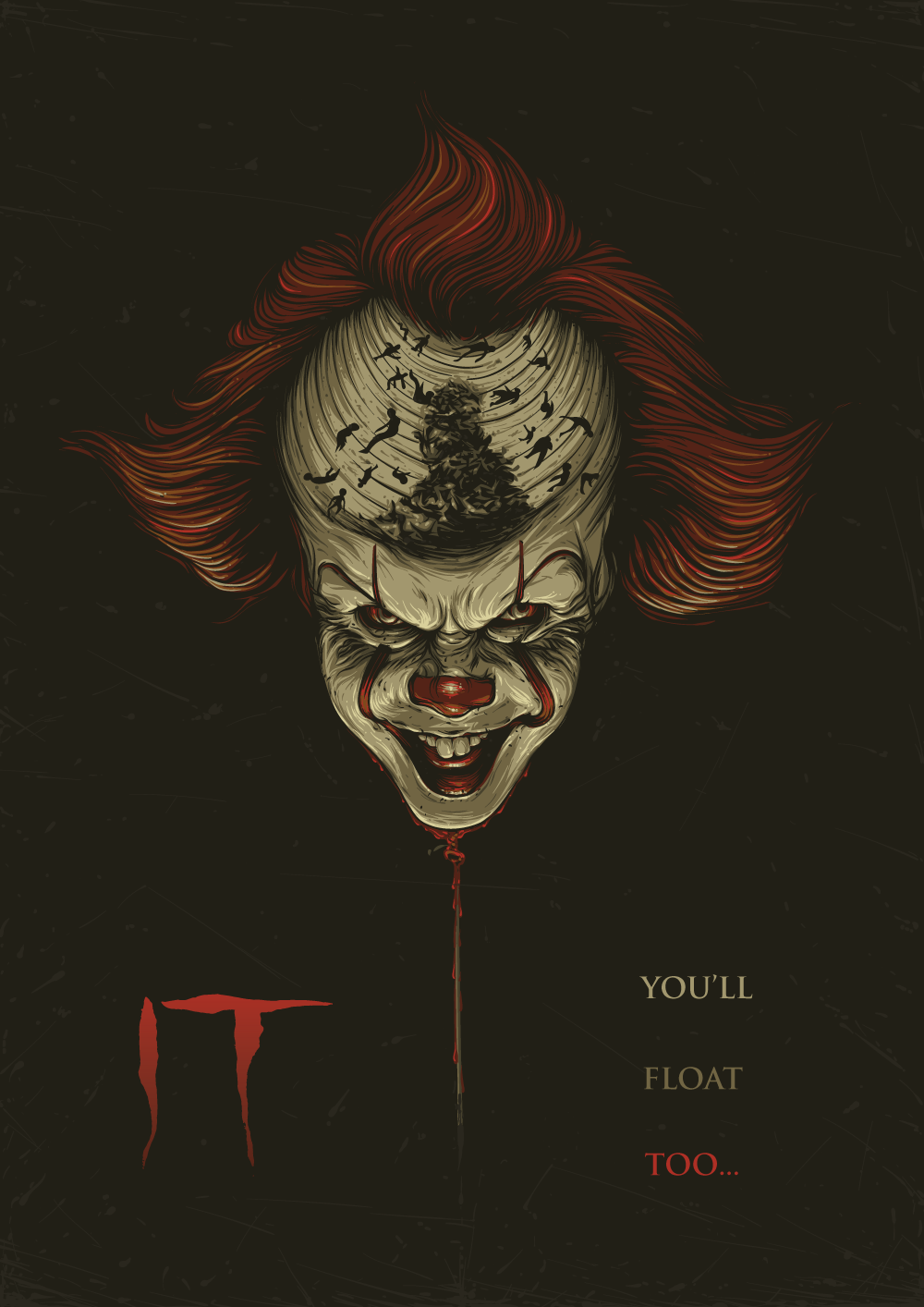
Stephen King is one of the most well known authors, with over 50 books published. Even if you haven't read one of his stories chances are you have seen a movie or TV show adaptation of his work. From movies like The Shining and Carrie to shows like the new Mr. Mercedes and Under the Dome, King’s work can be seen everywhere. With the new release of the movie IT based on King’s novel of the same name, I thought I'd take this week to talk about Stephen King, his legacy and impact on literature.

Known as the King of Horror, it's no wonder that several well known horror movies are based off of King’s work. But he's not limited to the horror genre. King has written well known works of fantasy, science fiction and drama as well. His epic fantasy series The Dark Tower was recently made into a movie, of little success. The period drama The Shawshank Redemption, known to many fans as a great movie, is based on a novella by King. There is a reason that so many of his stories have been adapted for visual media, it's simply because King knows how to tell a great story filled with suspense.

Given his ability to write several genres and variety within the genres themselves, it's no wonder King has been incredibly successful. Not just in book sales, but King has received several awards and achievements for his literary work. He was won the World Fantasy Awards, The British Fantasy Society Awards, the O. Henry Award, and the World Fantasy award for Life Achievement, just to name a few. While these aren't the most prestigious awards, and some literary snobs would even say that King is not a serious writer. But does he have to be?

Stories and works of literature are written for several different reasons but the main ones are to entertain and inform the readers. Not everything has to have deep themes and philosophical questions. In that context, King is a credible writer and should be respected for the work that he has done and the influence he has had on other writers and filmmakers as well.

So back to the new IT movie. I have seen it (no pun intended) and I've also seen the 90's mini series of IT and this new version is very different, while keeping the spirit of the book. As a suspense/horror film, the movie does a good job building the intrigue and mystery of the town of Derry and Pennywise the Clown. The story is focused on the kids and their fears. This very much feels like a young coming of age story in the vain of another Stephen King adapted movie, Stand by Me. There are some good jump scares but the movie does not overly rely on those and uses impressive special effects for the demon clown and what IT is capable of doing. One thing that the movie does overly rely on is the music cues. The scare beats become a bit predictable. But what this movie succeeds at is telling the story of all of the young kids. The child actors all do a great job, and the characters are really engaging which allows the audience to become sympathetic. The movie touches on some of the mythology about Pennywise and the town of Derry, but it's important to remember that this is the first part in the story and there is going to be a sequel that can delve deeper into some of the material from the book.

Are you a fan of Stephen King? If so, what's your favorite story of his? Go watch the new IT movie and share your thoughts.

Read my review for King's short story
"The Man Who Loved Flowers"

If you like to read stories on WattPad, then you're in luck! Because I have recently posted some short stories on WattPad! Get ready for Halloween by reading my spooky/thriller inspired stories!

"Grave Little Witches"

"Through the Blackout"


CW Arrow/Flash Crossover podcast leading up to Crisis on Infinite Earths
Available on PodBean and YouTube


Friday, September 8, 2017

The Virgin Suicides Podcast

Hopefully you have read my review for the novel The Virgin Suicides. But if you haven't (or even if you have) then go ahead and listen to my podcast review for the book. Hope you enjoy the podcast, if you have any suggestions for improvement please let me know.


Wednesday, September 6, 2017

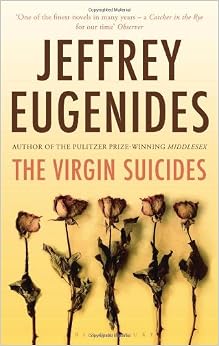
Review for "The Virgin Suicides"

The Virgin Suicides by Jeffrey Eugenides, first published in 1993 by Farrar, Straus and Giroux.


Summary
The story takes place in Michigan during the 1970's and is told from the perspective of the neighborhood boys who seem to be obsessed with the Lisbon girls. The book opens with an ambulance taking away the last daughter who committed suicide. It then jumps to the past events, thirteen months ago, that led up to the suicides. It all started with the youngest daughter Cecilia, thirteen, after her first attempt to commit suicide. The Lisbon parents kept the girls on lockdown in the house for the rest of the summer. During a party that was suppose to cheer Cecilia up, she instead decides to jump out the second story window of the house to commit suicide. She succeeds and is impaled on a fence. The story is then about the aftermath of Cecilia's death and how the four remaining sister are dealing it. The local community and narrating neighborhood boys are also constantly discussing Cecilia's death and the Lisbon family as a whole. The boys even steal Cecilia's diary in hopes of finding something that will explain her death.
                                                                                         Imagesource
Once school starts the girls tend to keep to themselves. The next youngest girl Lux, fourteen, starts to take interest in a boy named Trip. Trip then get's Mr. Lisbon to agree to let him and his friends take the four girls to the Homecoming dance. Lux and Trip leave the dance and she arrives home late, after curfew. Her action gets all of the girls in trouble and Mrs. Lisbon restricts them to the house, taking them out of school. The Lisbon house begins to fall apart remaining unkept and dirty. After Trip and the other boys fail to call the girls again, they become depressed and stay in their rooms all day. To make matters worse, Mr. Lisbon loses his job and the city attempts to cut down the Elm tree in the front yard. The one thing that reminded the girls the most of Cecilia.

 After months of being locked up in the house, the girls begin to contact the boys with paper notes and eventually brief telephone messages. Determined to help the girls the boys make a plan to drive the girls away, one night. Lux invites the boys in the house and tells them to wait for her sisters. She insists on waiting in the car after some time has passed the boys walk around the house looking for the other girls. That is when it is discovered that all of the girls have committed suicide. Therese, the oldest, by sleeping pills, Bonnie by hanging and Lux from asphyxiation. Mary attempted to kill herself using the oven, and the paramedics were able to save her, although she did die a month later by overdosing on sleeping pills. The Lisbon parents then sell their house and move. The new residents erasing the last traces of the Lisbon girls as the boys watch the neighborhood slowly forget what happened.

Analysis 
In the book the author deals with themes of conformity and happiness within society. The neighborhood tries to not mention the word "suicide" after Cecilia first makes the attempt. Even at the school remembrance of Cecilia, no one mentions her suicide. The story is set in a mundane suburban area outside of Detroit. The neighborhood tries to keep the facade of a happy, normal American society. The death of the Lisbon girls signify the downfall of the suburban community.

The title of the book, The Virgin Suicides is symbolic. The virgin represents the innocence of the girls and their journey puberty and teenage hormones. The suicides are literal but also figurative in that it brings up the notion of virgin sacrifices. Also the card with the Virgin Mary appears several times, also representing the innocence of the girls.

As a way to show the time of year, Eugenides uses fish flies to signify the summer season. They are a great way to show the passage of time. The elm trees are a symbol of the decay of the Lisbon family as well as the neighborhood. The elm tree in the Lisbon yard gets a sick and is then cut down. The last reminder the girls had of their sister Cecilia. At the end of the book, all of the elm trees on the block are cut down and the community see this as a spread of the disease that started with the Lisbon family.

A good piece of imagery comes at the end of the story. With Mary being carried out on a stretcher. She had a veil on her head and the firework sounds in the background. As if a "national figure is being laid to rest" (Eugenides, Pg. 232. pp. 2). This shows the tragedy of the death of the five girls as well as an end to the suicides.


Thoughts 
When I started reading this book, I knew of the movie but not exactly what the story was. So I went in not knowing what to expect. After reading the first two chapters of the book, I got curious and decided to watch the movie. Which was a mistake because after knowing the ending I sort of lost interest, resulting in it taking longer to finish the book then I had planned. I did enjoy the movie though. Now the book opens with the last suicide before jumping back in time to tell the story from the beginning. So the ending is not really a surprise. Since it's in the title, we expect the story to end with the suicides. The narrating boys go a bit further to give a short epilogue of what happened to the Lisbon parents and the neighborhood as a whole.

The Lisbon girls are described to be ordinary and the only thing unique about them was their suicides. It's what they will be remembered for and are seen as the start of the decline of their neighborhood. Throughout the whole book, the boys are constantly trying to find reasons for why the girls committed suicide. Even as adults they still go through the evidence the gathered, seeking answers. The narrating boys state that the girls simply refused to accept the flawed world that they lived in and that's why they committed suicide (Eugenides, Pg.239, pp.2). In the end the author does not give a clear reason for why the girls decided to end their lives. Instead he keeps the suicides as a symbol and reflection of the problems in society. 

While this is not really the kind of book that I would be interested in reading. Eugenides has a style that is detailed oriented and slow paced. It is still a good read and is sort of a coming of age story. I'm not sure that I will ever read this again, but I would recommend it to those that are interested in American literature. It does a good job at showing the a typical suburban town in America during the 1970's and what the pressures of societal expectations were like during that time. Even though I was not that impressed with this book, I would still be interested in reading other works from Jeffrey Eugenides. Specifically his Pulitzer Prize winning novel Middlesex.

Eugenides, Jeffrey. The Virgin Suicides. New York, Farrar, Straus and Giroux, 2015.


Well that's my review for the book. I hope you all enjoyed it. It's not an extensive analysis. There's a lot of other things that could be covered, but unless I read it a second time it's hard to fully discuss everything in detail. If you have any thoughts about the book please feel free to share them in the comments or tweet at me @BelleArboreus. You can also find the blog on Instagram @fantastic_literature . I will be posting a short audio podcast of this review. I will also be starting a new review segment on Fridays, so look out for both of those. Thanks for reading!

Friday, August 25, 2017

The Great Gatsby Podcast

So I finally got a new microphone, and figure out how to record for better sound quality. Hopefully. I finally recorded an audio version of my review for The Great Gatsby. It's a little bit longer than I wanted it to be, at just over 30 minutes. My aim is to keep the podcasts around 20 minutes. Listen to it and please give me some feedback on how I can improve the podcast as well as the blog. If you enjoy listening to the podcast then leave a comment, just so I can see who is interested. Thank you all for reading the reviews and listening to the podcast. I hope you enjoy! Next week I'll post my reviews for The Virgin Suicides, written and hopefully audio as well.