Fan-Lit

Welcome Everyone!

Welcome Everyone!

Thanks for visiting my blog where I review books and stories. I am a published author and I have a Master's Degree in English and Creative Writing. Some of my favorite books are "The Hunger Games" series, the "Percy Jackson and the Olympians" series and Brandon Sanderson's "Skyward" series. I love to read and write short stories; as well as discuss writing and literature in any medium. Hope you enjoy and feel free to comment and make recommendations.


Thursday, August 25, 2016

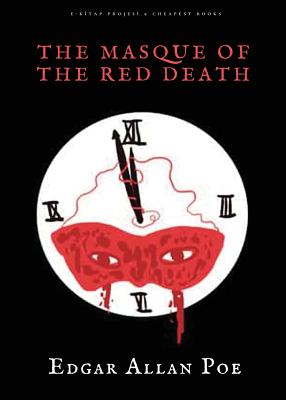
Review for "The Masque of the Red Death" by Edgar Allan Poe

"The Masque of the Red Death" by Edgar Allan Poe. Originally published in 1842 in Graham's Magazine. First published as "Mask of the Red Death: Fantasy". As I mentioned in my previous post I will begin to review works of the Dark Fantasy genre. Edgar Allan Poe is well known for writing short stories and poems that are considered dark fantasy due to his Gothic influence. This is just one of his many tales and the first one of his that I ever read. So I thought that it would be fitting that this story serve as a kick starter for my reviews of dark fantasy literature. Hope you enjoy! Review contains spoilers.


Summary

Rumors about a figure known as The Red Death plague a noble land. The Red Death brings disease and pain that kills its victim in half an hour. The scared people take refuge in the abbey of Prince Prospero. One night he holds a masquerade ball for his guests to take place in the seven rooms of the abbey. The first six rooms are all decorated with a solid color theme; blue, purple, green, orange, white and violet. The last room is black with crimson stained glass windows. Most guests are afraid of this room and do not enter it. In the black room stands a grand clock that chimes every hour. When it does the guests and the band stop dancing and playing. They wait in silence until the clock stops. At midnight the clock chimes again and the guests notice a hooded figure with a corpse mask. Prospero demands to know who the guest is, so he follows him through the six chambers with a dagger in his hand. The hooded figure enters the seventh room. Prospero walks into the black room to face the figure and immediately drops to the floor. He is dead. The other guests rush into the room to check on Prospero. They remove the mask and robe from the figure only to find there is nothing underneath. Every person becomes infected and dies. The Red Death strikes again.

Analysis

Setting
The story takes place within the castle walls of an abbey. There are seven rooms that the masquerade ball takes place. This gives the story a very gothic feel, which is what Poe is known for. It is an eerie setting that gives a feeling a suspense and adds to the effect of the story.

Irony and Allusions
The castellated abbeys are said to be guarded well behind iron gates and girdled walls. The only people there are the ones the Prince invited. So if the hooded figure were a common man, then how would he have arrived unnoticed? However underneath the robe and mask there is nothing, so the Red Death can come and go as it pleases. Undetected. The Prince's name is Prospero similar to the word "prosper" meaning to live wealthy and thrive. So it would appear ironic that he would be the first to die.

In the description of the Red Death the words "blood" and "scarlet" are mentioned. In the description of the seventh rooms window, the words "blood" and "scarlet" are also mentioned. This could be a subtle foreshadowing that the Red Death would end up in the Black room.

There are really only two characters that are discussed in the story. The guests aren't very descriptive. Prince Prospero is told to be a happy man that wants to ensure the safety of his townspeople and friends. The Red Death is talked about like a plague that comes into a place and kills everyone and then moves onto to another place. This clearly sets up the protagonist and the antagonist of the story.

Author's Influence
Red Death could be a symbol of many deadly diseases. Tuberculosis had taken the life of a few family members of Poe. The Red Death could then reflect some of his personal experiences. It could also represent the disease cholera that was an epidemic in 1831. The fact that in the Red Death in the story ends in the black room could also suggest that it is meant to represent the Bubonic (or Black) Plague. "

Personal Thoughts

The first time I read this story I found it to be interesting. I love the concept of the seven chambers each with a single color theme with the exception of the last one. I knew that something bad would happen in that room because its colors were black and red, which usually symbolize blood and death. Having read the story a few more times I like the introduction of the Red Death at the beginning and then we forget about it until the hooded figure shows up near the end.

The ending in which the Red Death kills the Prince did not come as a surprise to me. Being that the title of the story is "The Masque of the Red Death", it is easy to assume that the Red Death will show up at the masquerade. There are really no other characters mentioned so the only choice for death was the Prince, followed by his guests. It's not a predictable story but it also doesn't offer any real twists.

I am not a huge fan of Poe, but I do like the work that I have read by him so far. This story definitely has the same dark and Gothic elements that most of Poe's work has. One thing I really enjoyed were his use of visual language. Using the words "scarlet" and "deep blood" to describe the window panes. He uses several descriptive words twice, such as "bizarre" and "phantasm". Even the robe of the Red Death was described as "scarlet horror". Poe's use of imagery really allows the reader to visualize the story that is being told and allows them to get invested.

Lastly, I like the ending. While it is terrible that the Prince and townsfolk all died, I like the sentence that Poe ends with. He writes "And Darkness and Decay and the Red Death held illimitable dominion over all" (Pg 457)**. This states that the Red Death is in control and with it brings darkness and decay to every place it touches. It's a very depressing and dark look at what has happened to this world. For that, I simply love it. Poe is never afraid to go dark and horrific and here is no exception. If you like Edgar Allan Poe and have not yet read this story then I don't know why you've read this far, go read it, now. I highly recommend it.


The next story will be "The Monkey's Paw" by W.W. Jacobs.
Read The Monkey's Paw here


** "Edgar Allan Poe: Complete Tales & Poems". Dore, Gustave and Edmund Dulac. Top Five Books, LLC. 2013.

Tuesday, August 23, 2016

Next Story for Thursday 8/25/16

Hello readers! 

I'm moving on from dystopian societies and will start reviewing dark fantasies stories for a while. Who better to start with than Edgar Allan Poe. So I will start with my next review of one of Poe's dark tales, The Masque of the Red Death. If you have any suggestions for dark fantasy short story, feel free to let me know. So go ahead and read the story (link below) and then check out my review when it is up on Thursday 8/25/16.

Read The Masque of the Red Death here

Friday, August 19, 2016

Review for "The Lottery" by Shirley Jackson

Review of "The Lottery" by Shirley Jackson.

Read the Story Online Here or download a PDF Here

"The Lottery" by Shirley Jackson was first published in June of 1948 in The New Yorker.

The story takes place in a small village, on a summer day in June. The townspeople begin to gather around in the square awaiting an event called "The Lottery." This is a tradition that occurs every year and goes back several generations. While the children are gathering stones, the town selectman Mr. Summers is setting up the event. It requires a black wooden box and strips of paper. As Mr. Summers gets ready to start the lottery, Mrs. Hutchinson is running late but makes it in time. Old man Warner talks with the men about nearby towns that have gotten rid of the lottery or are thinking about getting rid of the lottery. Old man Warner claims that it is nonsense and the lottery is the tradition. Finally, the lottery begins, and one by one Mr. Summers calls the last name of each family. The head of the house goes up to grab a slip of folded paper. When every family has a paper, they open them up. The family that receives the paper with a black dot on it is selected in the second round. Each family member then randomly picks a piece of paper and whoever gets the black dot is chosen as the winner of the lottery. Unfortunately, the winner of the lottery is selected to be stoned to death by the townspeople. Afterward, everyone moves on with their lives until next year.

Shirley Jackson begins to foreshadow the tragic ending early on in the story with the mention of the children gathering stones in a pile. The winner of the lottery should not come as a huge surprise. Jackson sets up Mrs. Hutchinson is a quirky woman that might question the rules and traditions of the town. This attitude of hers is what sets her up to be the winner. While the idea of a lottery sounds like a rewarding event, the irony is that the winner is not bathed in riches but rather executed. The lottery system is usually associated with people winning money. Instead, here we get the winner being stoned to death.

In the opening sentence of the story, Jackson does a great job of setting up the town and the environment. She describes it as a warm day with blossoming flowers and green grass. This contrasts the horrific ending. The description of the town can precondition the reader into thinking the ending was going to be pleasant, which is not the case. The lottery can be seen as a satire for governments or societies that sacrifice people because they believe it will bring them peace and fortune. By raising the idea of not holding a lottery, Jackson is really inserting her thoughts of that time in history.

There are only a handful of people in the town that are mentioned in the story. Mr. Summers is described as a "round-faced, jovial man" who owns a coal factory. In a way this almost makes him sound like Santa Claus. So it seems ironic that he would be the one to deal out the lottery, which ultimately leads to the death of a person. Old man Warner is sort of the stereotypical cranky old man who firmly believes in traditions and not changing. Mrs. Hutchinson is described as a woman who doesn't fit the standard conformity of the other women in the town.
The names that Jackson chose for her characters are quite fitting and seems intentional. The names are allusions and symbols for the traits of each character. Hutchinson is a name that could be referring to Anne Hutchinson who was a Massachusetts colonist that was excommunicated from the Puritan Church for being a heretic. The name Martin could be referring to the Latin word Martinus, which means protector god of the Latins. It's sort of a stretch, but it could be because Mr. Martin was guarding the lottery box. The name Summers is pretty on the nose. The word summer evokes a sense of warmth and happiness. Mr. Summers is described as being a cheerful guy and also conducts the lottery, which takes place in the summer. The other visible name in the story is Graves. That is clearly meant to represent the death that the lottery brings. Other names can be interpreted to have some sort of meaning as well. The name Delacroix means "of the cross," Adams could refer to God's first man, Warner, the old man that "warns" people not to go against the lottery. Another example of symbolism is the use of the black box and the black spot of paper in the event. The color black is known as a symbol for death, so that should have been the reader's first clue that the lottery was not a good thing.

From the content in the story, it is possible to assume that the author is against the lottery. This is evident in the scene where Mr. Adams tells Old man Warner about the other towns that have stopped holding a lottery. Jackson brings up this idea to show the reader that there are people against the lottery. Old man Warner then sounds like a crazy person for continuing to go along with killing a person each year just because it is the tradition. The fact that Mrs. Hutchinson pleads to her family and the townspeople, in the end, is also a sign that Jackson is against the lottery. Perhaps Mrs. Hutchinson represents the thoughts and actions that Jackson would take if she had been the winner of the lottery.

The Lottery is one of my favorite short stories probably because it reminds me a bit of The Hunger Games as well as my favorite short story, the previously reviewed, Harrison Bergeron. Both stories are about a society that imposes laws or rules that the people must follow without question. In the lottery, the punishment of death is nothing personal but rather a pure "luck of the draw" scenario. I'm always drawn to stories that have these governments that do the wrong thing to people because they believe in the greater good of society. What I like about The Lottery is that it does not agree nor disagree with the idea of the lottery. The story reflects how people in the community can react to these terrible long-standing traditions. It's basically the herd mentality. People go along with it because everyone else is going along with it. When the winner is drawn people justify the lottery as being okay because they were not the person chosen for death.
When I first read the story, I had no idea what it was about other than the title telling me there was a lottery involved. However, I was not really surprised by the ending because I knew that something terrible was going to happen to the lottery winner. I think I first realized this when I was reading about the townspeople talking about the other towns giving up the lottery. If other cities no longer believe in the system, then there must be a reason why. Those reasons are usually not something positive. When Mrs. Hutchinson protests at her family being selected, I was almost sure that she was going to be the person to win. The one thing I did not really see coming was the stones. I thought that it was just a throwaway line in the beginning. I did not realize that these people were going to be stoned to death. That was a shocking twist that I find to be horrifying.

While it may be one of the more well-known short stories, it is regarded highly for a reason. Because of the theme that it touches on as well as the technique and style, it is written in. If you have not read it by now (I don't know why you would be reading this first) then you should go read it very soon. It's not a big flashy story, it's subtle but meaningful.

While I'm not as good a horror writer as Shirley Jackson, check out my spooky/thriller inspired stories on WattPad!


"Grave Little Witches"

"Through the Blackout"


Looking for a Halloween themed children's book? Check out my book “Who Scared Jack?” About a pumpkin named Jack who is scared on Halloween night. Join him as he makes his way through his house filled with all sorts of spooky creatures as he looks for the monster.

Buy “Who Scared Jack?” with this link 


Sunday, August 14, 2016

Delay

Sorry for the delay, sometimes life happens. I will reread the short story The Lottery and write up my thoughts. A new post should be up on Thursday. I will try to give more of a heads up next time. Again, sorry for any inconveniences. 

Wednesday, July 20, 2016

Review for "Harrison Bergeron" by Kurt Vonnegut

"Harrison Bergeron" by Kurt Vonnegut published in 1961 by The Magazine of Fantasy and Science Fiction. 


Summary
     The story takes place in the year 2081 where future amendments to the U.S. Constitution have declared that all people were to be equal in strength, beauty and intelligence. People are given devices known as "handicaps" to try and make them equal with the average person. Some one who is really smart has to wear a radio earpiece that makes loud, sharp sounds every 20 seconds, which causes them to lose their train of thought. People who are physically strong have to wear weights and people who are beautiful have to wear masks, and so on. These laws are enforced by a person known as the Handicapper General. One couple, George and Hazel, had a teenage son that was taken away from them and placed in jail because he defied the government. Hazel is considered "average" and thus has no handicaps, while George has both weights and the earpiece. While watching a ballet program one night they witness on television the escape of their son Harrison, as he takes over the broadcast. Harrison removes his many handicaps with ease and declares himself the new ruler of the country. He is eventually shot by the Handicapper General. As she sees this on TV, Hazel begins to cry. George gets a sound shot in his ear and forgets what she was crying about. When asked, Hazel says that she cannot remember.

Analysis
     The theme of the story deals with censorship and government control. It serves as a cautionary tale of what would happen to society if egalitarian ideals were taken to the extreme. This is noted in the opening paragraph where it states that people were equal in every way, not just in human rights. The character of George is seen to be a hard working man, who does not question his handicaps. His wife asks him to remove his weights if only for a bit, and he refuses because he does not want to go to jail. He believes in the system, and that people are better off not being competitive. As the story progresses the noises in his ear get louder and more painful. Symbolizing the the escalation of their son's escape and ultimate death.
     Hazel is stated to be "average" but what that really means is that she has a simple mind and easily distracted. Harrison is shown to be a person that believes in individual freedom and self expression. He represents the people that will fight for their rights and refuse to have their abilities handicapped. He is the passion that people have towards living life, in what has become a passion-less society. The idea of having an equal society comes at the cost of individual freedom. At the end of the story, neither parent can remember what has happened to their son. This shows the extent of the governments control on people, and how little outside influences affect them. 

Review
     This a great story that I always enjoy reading and analyzing. I am a sucker for a good dystopian story. "Harrison Bergeron" brings up a lot of good questions about individual rights and the extent of government control. It's not clear in the story whether or not the Handicapper General, or any high power government officials, have to where the handicap devices. It would be hypocritical of them if they didn't but also I can see the government giving this privilege to people in power. Since beauty is sort of a subjective matter, who is the one that determines if a person is too beautiful, thus requiring a mask?
     While the purpose of the handicaps was to create equality among people, it still remains a bit unfair. In the story the more attractive a person is the uglier their mask. This is clearly not the same as being equal to someone like Hazel who is considered average. She doesn't have to wear any devices, which actually could mean she is better off than most. She doesn't have anything external hindering her. I think the idea is that, no matter what you do, there is no such thing as being truly equal because it is in our very nature to be different. 

     Everyone has a different idea of what equality is. I like that Harrison refuses to be held down by the government and is willing to risk his life in order to do what he believes is right. The sad part is that not even his own parents remember what happened to him, and the message that he was trying to spread. One man tries to fight the system and no one cares or will remember. It makes you think what it would take to bring down the government in this society. I highly recommend this story for everyone even if you're not a fan of the genre, it's still a good and quick read. Enjoy!


     I have also recorded a short audio of my review, that basically talks about the same things. It was a bit rushed, I apologize. If podcast are something that interest people I will consider doing more then. Next time I will be reviewing another favorite short story of mine called "The Lottery" by Shirley Jackson. 

Read the Story Here

Welcome to my Fantastic Review of Literature

Hello everyone!


     Welcome to the Fantastic Literature review blog. The main purpose of this blog is to review short stories and novels. Occasionally, I'll post informational articles, such as book news and author segments. The goal of the reviews is to provide insight into the story and give my opinions on how I interpreted the story. The love to discuss story plots and characters. I always try to find some value in each story whether it's a moral lesson or cautionary tale. Another reason I wanted to do the blog is to expose people to stories they might not have heard of before.

    As a writer, I prefer the short story genre. I have a Master's degree in English and creative writing. I started the blog in part to motivate myself to read more books. I prefer to read Young Adult fantasy and science fiction. I'm a big fan of classic fairy tales, like the original Little Red Riding Hood and Snow White. With short stories and almost every work of fiction that I read, I like to dissect the story, the words and the themes that are present. I always like to discuss a good story whether it is a written story or a TV show or a movie.

    Post will go up at least twice a week. There may be some delays, due to the fact that I'm a slow reader so novels take a while for me to finish. That's why I focus more on short stories. If you have any recommendations, please let me know. I can't guarantee I will review it but it's still good to expand my knowledge of literature.  So I hope that everyone enjoys the blog. Feel free to leave me any comments and feedback. Thank you!