So I finally made an introductory podcast about what the audio reviews will be like. The audio is very poor, so please be patient, I am getting a new microphone. But enjoy and the audio review for The Great Gatsby will be up next week! Please give me your feedback on this, again the production quality is low, there's a gap of silence towards the end. I'm still familiarizing myself with the podcasting website and I'm not used to speaking into a microphone. With some time the quality will improve. Thanks again for listening.

Friday, August 18, 2017
Review for "The Great Gatsby"
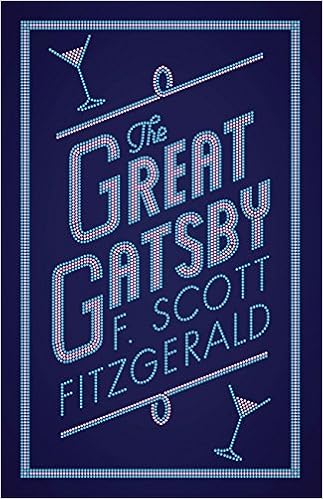 The Great Gatsby by Fitzgerald, F. Scott. First published in 1925 by Charles Scribner's Sons.
Summary
The Great Gatsby is told from the perspective of Nick Carraway, the neighbor of the mysterious Jay Gatsby. Nick is the cousin of Daisy Buchanan, who is married is an old Yale schoolmate of Nick's named Tom. Tom and Daisy live across the bay from Nick in Long Island, New York. One night Gatsby invites Nick to his party and Nick runs into Daisy's friend that he met once named Jordan. To his surprise he finally meets the elusive Gatsby, who takes a keen interest in getting to know Nick. We find out that Gatsby knows Daisy and has been in love with her for years. Nick also spends time with Tom who he discovers is having an affair in the city with a married woman named Myrtle. Nick is slowly being drawn into the world of the rich and party lifestyle. He helps Gatsby to meet with Daisy and the two begin to reconnect with each other. This upsets Tom who is determined to prove that Gatsby is a fraud and from what Gatsby tells Nick, Tom is right. One day Tom insists that Daisy, Gatsby, Nick and Jordan all go into the city for the afternoon.
A confrontation between Tom and Gatsby occurs, both bidding for Daisy's love. Daisy tells Gatsby that she does love Tom and can't just leave him immediately. Upset, Gatsby and Daisy leave the city to head back to Long Island. On the way back Gatsby's car hit and kills Mrytle, and drives off. Following not long behind them is Tom, Nick and Jordan who see the accident on the road. Tom is sad to learn of his mistress' death, and implicates Gatsby in the crime. Later that night Nick runs into Gatsby who confesses that Daisy was driving when the car hit Mrytle. After that Daisy does not call Gatsby and while swimming in his pool at the end of summer, Mrytle's husband comes from behind to shoot and kill Gatsby. Nick is surprised to find that no one attends Gatsby's funeral. Disgusted by the behavior of these rich people including Daisy, Tom and Jordan, he decides to leave New York and move back to his hometown.
Analysis
Fitzgerald uses the time and setting of 1920's New York to explore the concept of the American dream and more importantly the disillusionment of the American dream. The setting of 1920's New York is a perfect backdrop for the characters and their story. During the 1920's lots of people like Gatsby were starting their own businesses and creating their own wealth outside of their family in big cities like New York. As a result of big industry prospering and the popularalirty of automobiles people started to live a new lifestyle. It's a great setting to show the various social classes and the party lifestyle that everyone was trying to live. As well as how money can change or influence a person and their values.
The more involved with this extravegent lifestyle, the more Nick discovers the immoral behavior of his friends and the carelessness that comes with the rich. Nick says that Gatsby "paid a high price for living too long with a dream." (Fitzgerald, P.161 pg.3). Gatsby was chasing a dream that has long past him by. As the story goes on, the tone of the wealthy is no longer seducing Nick, but he decides that it does not line up with his personal morals.
Gatsby represents "new money" and Daisy "old money". The book defintely explores the difference in societal classes. Tom is a man from old money who marry's Daisy who is also from old money. However, Tom has an affair with Myrtle Wilson who is married to a man that owns a garage and live a fairly poor lifestyle. Nick is from an old money family, but he himself does not have a lot of money and is trying to work his way up in business, like Gatsby did.There's very interesting relationships from each of the characters in regards to money. In the end Daisy decides to stay married to Tom despite both of their infidelities. In contrast, Nick decides to decline Jordan's offer to be together.
The book offers great symbolism, some that are subtle and some that are not. The green light at the end of the dock represents the hope that Gatsby has in his dream of being with Daisy. The Valley of the Ashes represent a space in which the rich have exploited resources thus creating a land of the poor. A land where the dreams of Americans are not being fulfilled. This space is where Mrytle and her husband literally and figuratively live in.
The starring eyes of Doctor T.J. Eckleburg on a billboard over the Valley of Ashes is mentioed several times throughout the book. The character of Mr. Wilson looks out at the eyes of and thinks that it is the eyes of God (Fitzgerald, Pp 159-160). While the eyes are merely a painting on a billboard they represent the idea of not being able to get away with immoral behavior because someone is always watching.

Thoughts
I first read The Great Gatsby in high school, and then saw the Leonardo DiCaprio movie a few years ago. Not really thinking highly of the book, or film I thought it only be fair that I give the book another read. When I had to pick two American books to read for a class, I immediately chose The Great Gatsby. As I began to read the book I was not impressed with the first chapter or so. But as a I read on, I found the story and mystery of Gatsby to be very compelling. I quickly realized that it's a book about the relationships of these people and their connection to money. Yes, there is a love story between Gatsby and Daisy which drives the plot of the story, but that is never really the message or focus that Fitzgerald is trying to tell. Fitzgerald does a great job at showing the different ways people try to achieve their dreams and how they can be corrupted by wealth.
The ending is a bit of a surprise but in terms of the character of Gatsby, his ending was a result of the lifestyle that he chose to live. There's a sense of irony to it, being that Gatsby did everything in order to win the love of Daisy, when in the end he losses her, and his own life. I feel there's also a moral lesson to be learned in that, we can't buy people's love, they have to love us for who we are, whether or not we have money. Daisy says she loves Gatsby, but was she ever interested in him as a poor farmer? And even with his new money, she still wasn't willing to leave Tom for him. So Gatsby changed himself for something he was never going to get. As a result it's his downfall. So for me the message is be yourself and don't chase people that don't love you the way you are.
I started reading The Great Gatsby with one question in mind. Is this truly an American classic and why? After reading it and analyzing it I have reached the conclusion that, yes, this is an American classic piece of literature. It's because of the themes that Fitzgerald writes about and the personal relationships between the characters that make it a compelling story and interesting look at people of different social classes. This is a book that everyone should read, and most likely I will read again.
So that's it, I hope you all enjoyed my review. If anyone has any suggestions for stories then please leave your recommendations and general thoughts in the comment section below. You can find me on Twitter @BelleArboreus and on Instagram @Fantastic_literature
I have begun putting together a podcast for the blog, so be sure to look out for that soon. I will do an audio review of The Great Gatsby, pretty much everything that you have just read. The next story review will be for The Virgin Suicides by Jeffrey Eugenides.
Thursday, August 10, 2017
Coming Back Soon
Hello, everyone! I took a long break to focus on school, as I had some books I needed to read there (I'll post reviews for those) as well as receive my degree. I then took the Summer off to deal with a tragic loss and to spend time with my family. I will be returning next week, with some new reviews of books. That's right! I'll review my first books for the blog, before getting back into reading short stories.
I'll start off by doing one review a week, working towards my goal of doing at least two reviews a week. I've also been thinking about doing an audio podcast version of my reviews. For those that don't have time to sit in front of the screen and read, but still want to hear the reviews. If anyone has any ideas on how to help my improve my blog please leave a comment or send me a tweet @BelleArboreous . Maybe on the podcast I'll properly explain that name. Lol. So look out for a new review up next week, sorry for the 6 month long delay, please come on back and enjoy the blog. Thanks!
I'll start off by doing one review a week, working towards my goal of doing at least two reviews a week. I've also been thinking about doing an audio podcast version of my reviews. For those that don't have time to sit in front of the screen and read, but still want to hear the reviews. If anyone has any ideas on how to help my improve my blog please leave a comment or send me a tweet @BelleArboreous . Maybe on the podcast I'll properly explain that name. Lol. So look out for a new review up next week, sorry for the 6 month long delay, please come on back and enjoy the blog. Thanks!
Wednesday, January 25, 2017
Review for "All Summer in a Day" by Ray Bradbury
"All Summer in A Day" was written by Ray Bradbury in 1954 and published in the March issue of The Magazine of Fantasy & Science Fiction.

Summary
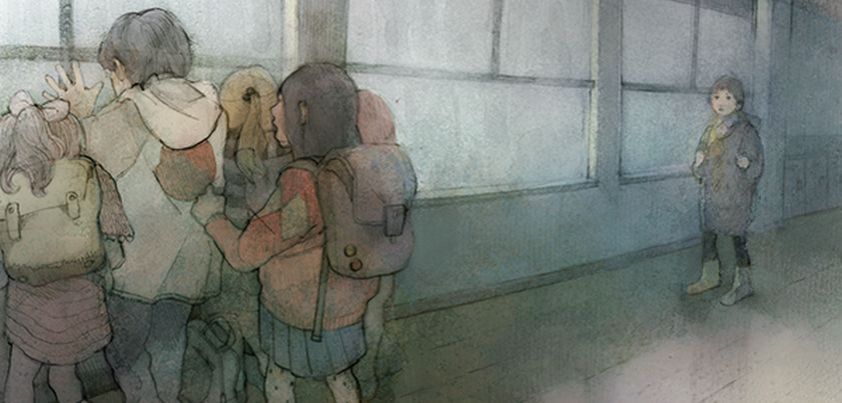
The story takes place on the planet Venus where people have been living in underground tunnels because of the constant rain. The planet's weather is cloudy, with thunder and rain storms all of the time. Once every seven years the rain stops, the clouds part and the sun comes out for just two hours or shorter. Scientists have predicted the day the sun will come out and the story opens with school children anxiously awaiting the arrival of the sun. All of the children, with one exception, were born on Venus and were too young to remember the last time the sun came out, seven years ago. One girl named Margot was born on Earth and does remember what it was like to live on a world with plenty of sunlight. She has lived on Venus for the last five years and constantly misses the sun and the planet Earth, hoping to return there in the future.
The children make fun of Margot and do not believe her stories of life on Earth. They find her strange and decide to lock her in a closet, preventing her from playing in the sun that day. Without noticing Margot's absence the teacher lets the children run outside when the rain finally stops. They bask in the glow and warmth of the sun, they run around playing games and observing the animals that have also come out of hiding. The children were excited and happy to be enjoying the sunny weather. After a while, a few raindrops had fallen upon them and their smiles disappeared as they walked back inside to their classroom. Suddenly one of the kids remembered that Margot was still locked in the closet. Scared of getting into trouble the children were silent. Not being concerned as to why Margot was in the closet the teacher waits for one of the kids to go let her out. Margot had stopped crying and was silent by the time the door opened.
Analysis
There are several descriptions and interpretations about the sun and how people experience it. Margot's poem compares the sun to a flower in the sense that it will blossom and be beautiful. She also says that it is like a penny or a fire. The sun is also described as being a flaming bronze color. Gold, a yellow crayon, and a coin are also mentioned as being vague memories of what the sun was like for the children. These are all excellent examples of how to describe the sun to someone that has never experienced it before. It shows that people see different traits and qualities and all can be correct answers.
One of the themes of the story is represented well in the way that Venus is described. The planet's environment and atmosphere consist of constant rain and storms. This is the depression that people deal with, the sadness and darkness in our everyday lives. What Bradbury did in the story was to give people a break from that, to see the very literal light at the end of the tunnel.
For a couple of hours, the sunlight brings joy. It revitalizes the children and gives them hope and encouragement. That is a metaphor for life, there will always be rain and storms but it is the sunlight that gets us through it. This is shown through Margot who was happy living on Earth in the sun and has become saddened living on Venus in the rain. She does not get to experience that brief moment of happiness, so she remains sad and in the dark until the end of the story.
Thoughts
This story reminds me of why I would not want to live in a city like Seatle where it rains most of the year. It feels like a very depressing environment. For a girl like Margot to leave sunny Earth, presumably she didn't live in Seatle, to come to a place with no sun and constant rain would be very traumatizing. It is no wonder she comes off as a weird girl to the other children.
One thing that stood out to me is how terrible the teacher was if you couldn't tell from my summary. The teacher doesn't notice that Margot is nowhere to be seen for almost two hours! Then she is not concerned when she finds out that she's been in the closet that whole time! Now it is not a big deal, and it's just there to let the plot unfold as is, but I find it to be annoying and that woman should be fired. Or at least a little bit more worried that her student was trapped in a closet. I wonder how long it would have taken the teacher to realize Margot was missing is no one said anything?
There are many elements to this story that play out very well. First, it is a science fiction story because it takes place on another planet, that is inhabitable. However, the story does not play out like a standard sci-fi story. It is about the environments that people live in, it's about children being bullied in school, it's about the simply joy of being able to stand in the sun. As a child, I remember days that it would rain and I would be so excited when it stopped to go outside and play in the sun.
I enjoy reading this story because although it is all about the bright sun, it is rather a dark tale. The constant rain sounds depressing, the children are mean to Margot and lock her in a closet, and just when they are enjoying themselves in the sun the rain returns. If the sun represents happiness then it is sad to think that our moments of happiness are far and few in between. If the sun merely represents the hope that keeps us going, then it is sad to think that Margot was deprived of that experience. There are just a lot of levels to this story and it can be interpreted in many ways. There's nothing that is super exciting about the story, it is just an interesting look at people and society.
Thank you for reading this weeks review of "All Summer in a Day", next week I will be reviewing "Robot Nemesis" by E.E. "Doc" Smith. If anyone has any suggestions for short stories then please leave you recommendations and general thoughts in the comment section below. You can find me on Twitter @BelleArboreus and on Instagram @Fantastic_literature
The story takes place on the planet Venus where people have been living in underground tunnels because of the constant rain. The planet's weather is cloudy, with thunder and rain storms all of the time. Once every seven years the rain stops, the clouds part and the sun comes out for just two hours or shorter. Scientists have predicted the day the sun will come out and the story opens with school children anxiously awaiting the arrival of the sun. All of the children, with one exception, were born on Venus and were too young to remember the last time the sun came out, seven years ago. One girl named Margot was born on Earth and does remember what it was like to live on a world with plenty of sunlight. She has lived on Venus for the last five years and constantly misses the sun and the planet Earth, hoping to return there in the future.
The children make fun of Margot and do not believe her stories of life on Earth. They find her strange and decide to lock her in a closet, preventing her from playing in the sun that day. Without noticing Margot's absence the teacher lets the children run outside when the rain finally stops. They bask in the glow and warmth of the sun, they run around playing games and observing the animals that have also come out of hiding. The children were excited and happy to be enjoying the sunny weather. After a while, a few raindrops had fallen upon them and their smiles disappeared as they walked back inside to their classroom. Suddenly one of the kids remembered that Margot was still locked in the closet. Scared of getting into trouble the children were silent. Not being concerned as to why Margot was in the closet the teacher waits for one of the kids to go let her out. Margot had stopped crying and was silent by the time the door opened.
Analysis
There are several descriptions and interpretations about the sun and how people experience it. Margot's poem compares the sun to a flower in the sense that it will blossom and be beautiful. She also says that it is like a penny or a fire. The sun is also described as being a flaming bronze color. Gold, a yellow crayon, and a coin are also mentioned as being vague memories of what the sun was like for the children. These are all excellent examples of how to describe the sun to someone that has never experienced it before. It shows that people see different traits and qualities and all can be correct answers.
One of the themes of the story is represented well in the way that Venus is described. The planet's environment and atmosphere consist of constant rain and storms. This is the depression that people deal with, the sadness and darkness in our everyday lives. What Bradbury did in the story was to give people a break from that, to see the very literal light at the end of the tunnel.
For a couple of hours, the sunlight brings joy. It revitalizes the children and gives them hope and encouragement. That is a metaphor for life, there will always be rain and storms but it is the sunlight that gets us through it. This is shown through Margot who was happy living on Earth in the sun and has become saddened living on Venus in the rain. She does not get to experience that brief moment of happiness, so she remains sad and in the dark until the end of the story.
Thoughts
This story reminds me of why I would not want to live in a city like Seatle where it rains most of the year. It feels like a very depressing environment. For a girl like Margot to leave sunny Earth, presumably she didn't live in Seatle, to come to a place with no sun and constant rain would be very traumatizing. It is no wonder she comes off as a weird girl to the other children.
One thing that stood out to me is how terrible the teacher was if you couldn't tell from my summary. The teacher doesn't notice that Margot is nowhere to be seen for almost two hours! Then she is not concerned when she finds out that she's been in the closet that whole time! Now it is not a big deal, and it's just there to let the plot unfold as is, but I find it to be annoying and that woman should be fired. Or at least a little bit more worried that her student was trapped in a closet. I wonder how long it would have taken the teacher to realize Margot was missing is no one said anything?
There are many elements to this story that play out very well. First, it is a science fiction story because it takes place on another planet, that is inhabitable. However, the story does not play out like a standard sci-fi story. It is about the environments that people live in, it's about children being bullied in school, it's about the simply joy of being able to stand in the sun. As a child, I remember days that it would rain and I would be so excited when it stopped to go outside and play in the sun.
I enjoy reading this story because although it is all about the bright sun, it is rather a dark tale. The constant rain sounds depressing, the children are mean to Margot and lock her in a closet, and just when they are enjoying themselves in the sun the rain returns. If the sun represents happiness then it is sad to think that our moments of happiness are far and few in between. If the sun merely represents the hope that keeps us going, then it is sad to think that Margot was deprived of that experience. There are just a lot of levels to this story and it can be interpreted in many ways. There's nothing that is super exciting about the story, it is just an interesting look at people and society.
Thank you for reading this weeks review of "All Summer in a Day", next week I will be reviewing "Robot Nemesis" by E.E. "Doc" Smith. If anyone has any suggestions for short stories then please leave you recommendations and general thoughts in the comment section below. You can find me on Twitter @BelleArboreus and on Instagram @Fantastic_literature
If you like to read stories on WattPad, then you're in luck! Because I have recently posted some short stories on WattPad! Get ready for Halloween by reading my spooky/thriller inspired stories!
Wednesday, January 18, 2017
Review for "The Star"
Summary
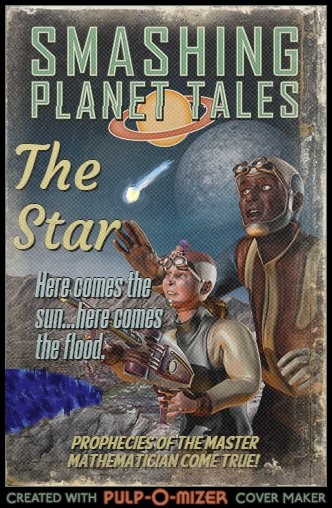
In the year 1900, a luminous celestial object enters our solar system and disrupts the orbit of the planet Neptune. This change was first noticed by an astronomer named Ogilvy a month earlier but was paid no attention by the public. The star then engulfs itself with the planet, Neptune. The star then proceeds to continue on a path towards the sun and the media starts to alert the public of what is to come.
As the star passes through the solar system is affects Jupiter and it's moons. A character called the master mathematician states that the star will either hit Earth or pass by it very closely. He says that the close proximity of the star will lead to apocalyptic conditions on Earth. Lots of people believe he is wrong and thinks there will be no problems caused by the Earth. When the star starts to pass in front of the Earth the planet gets hotter and hotter. Volcanoes start to erupt spewing lava and ash, earthquakes are frequent and because the heat is melting the planet's ice, floods are taking over the lands. All of these catastrophes have begun to affect and worry people all over the world.
The star eventually passes the Earth and does collide with the sun, essentially getting absorbed into its mass. Which leads to more heat output and Earth remains hotter than what it was. Months and months go by and people have begun to move to ice melted Greenland that is now covered in grass. After surviving the apocalypse people continue to survive and rebuild.
Analysis
In the story, it mentions that some people see the fire in the skies and thinks of the war and pestilence that is yet to come. This is a reference to the biblical four horsemen of the apocalypse, two of which are War and Pestilence. This could be a subtle foreshadowing to the apocalypse that ends the story.
There is also a reference to the apocalypse that people were worried about in the year 1000, which turned out to be a passing comet. The comparison is that people worried a long time ago and nothing came of it and now people are worrying all over again.
The story takes place all over the world which gives it a real feel that the stakes are high and that the whole planet Earth is in danger. The ending is not as to be predicted but rather ends on a positive note.
There is a repeated phrase that appears early in the story, "it is nearer". While the phrase might sound harmless at first glance, the repetition signifies a more tragic meaning. The tragedy comes when it is realized that "nearer" means that the star is coming closer and closer to the Earth.
The character Ogilvy and master mathematician are both intelligent men that foresaw something that people ignored. This shows that the mass public doesn't always believe in what they hear and try to have a more optimistic look at the events to come.
Thoughts
While not a very long story, The Star is very dense in details. It can be easy to get lost in the description of the cataclysmic events. While the story is told linearly, I did found it hard to keep track of how much time had passed from the beginning of the story to the end. What I like about this story is that it reminds me of disaster movies, of which are a guilty pleasure of mine. It has a mixture of the movies Deep Impact and 2012, specifically in regards to people figuring out what is going on, trying to keep things a secret but ultimately preparing the public.
The interesting part about the story is the amount of astronomy that H.G. Wells describes given the fact that we have so much more information about space and stars and our solar system. Wells was always ahead of his time, and this story shows that. Overall it's a good short read for those that like these kinds of science fiction stories.
Glossary-These definitions are according to the Merriam-Webster Dictionary.
Perturbed: To cause to be worried, upset or being thrown into confusion.
Impalpable: Intangible. Cannot be felt by touch; Or not easily recognized by the mind.
Agape: A state of wonder; wide open.
Spectroscope: An instrument used to measure the properties of light.
Pallid: Pale or lack of color; dull or uninteresting.
Zenith: Highest point reached in the sky by the sun, moon and celestial objects.
Phial: Vial.
Obdurate: Stubborn; Resistant to changing your opinion.
Tumult: A state of noisy confusion; Or a state of mental and emotional confusion.
Nowhither: To or toward no place.
Thither: To that place.
Minaret: A small, thin tower of a mosque with a balcony from which people are called to prayer.
Sorry for the long delay but thanks for reading! The next review will be on the Ray Bradbury short story "All Summer in a Day". You can read the story here "All Summer in a Day" as well as watch the short video on YouTube.
Again thanks for reading my blog, feel free to leave your comments below. Follow and comment on social media. Twitter @BelleArboreous and Instagram @fantastic_literature
If you like to read stories on WattPad, then you're in luck! Because I have recently posted some short stories on WattPad! Get ready for Halloween by reading my spooky/thriller inspired stories!
Wednesday, January 4, 2017
New Year Update
Hello All! Happy New Year, hope everyone enjoyed the holidays!
Now that the holidays are over and work is back to normal hours, I will be getting back to the blog next week either the 11th or 12th. I will return by reviewing The Star by H.G. Wells, continuing with my review of science fiction stories. With this new year I might star trying something new with the blog, so come back next week to read the review and to stay updated with anything new that might be coming soon. Thank you everyone and have a great start to the new year 2017!
Now that the holidays are over and work is back to normal hours, I will be getting back to the blog next week either the 11th or 12th. I will return by reviewing The Star by H.G. Wells, continuing with my review of science fiction stories. With this new year I might star trying something new with the blog, so come back next week to read the review and to stay updated with anything new that might be coming soon. Thank you everyone and have a great start to the new year 2017!
Wednesday, November 16, 2016
Review for "An Express of the Future"
An Express of the Future by Jules Verne was first published in "The Strand Magazine" in 1895.

Summary
The story starts with an unnamed gentleman being escorted onto a train by the conductor, Colonel Pierce. The man does not remember why or how he got there and has a hard time believing what the conductor is telling him. Colonel Pierce explains to the man that he is on a train leaving a station in Boston, traveling underwater to Liverpool, England. The man recalls reading an article about the construction of this train and thought it was unbelievable. The conductor explains to the man how the train was built and how it works. The train travels at 1,800 kilometers per hour and takes about two hours and forty minutes to make the trip. The man asks questions, such as how can the train stop at such fast speeds without being destroyed. The conductor tells him about how the tunnels were constructed and the use of air in slowing down the train. After he is shown the passengers carriage the man asks when the train will start moving, and the conductor responds by saying the train hs already begun. The man felt no movement and could not believe this. After feeling wetness on his eyebrow the man assumes there is a crack in the tube and that the under water pressure was too much. A sense of fear overcame him and he woke up in his garden with a magazine by his side discussing the project of Colonel Pierce.
Since the story was written in the 1890's the technology for trains was still limited to steam engines crossing vast lands. There was nothing like a pneumatic system and certainly no trains the traveled underwater. Verne was simply looking to the future of what train travel could be in the future. The story is set on a train because that was the primary method of transportation for large groups of people during that time. The idea that the train can be propelled by air is not that far stretched and is even similar to the Hyperloop that Elon Musk proposed recently. Which would allow people to travel to travel from southern California to Northern California in a short time. A trip that is over 6 hours long by car.
What I like about this story is that it takes place in a future time where this kind of technology is a possibility. At the end we find out it is not the reality but it is something that could become real in the future in the story's world. I would love to see more from this futuristic world that Verne has created. Are there other major technological advances in this world? Or is this a steampunk setting where the world is still in the 1800's the only difference is this train? Seeing as this is Jules Verne I'm more inclined to think it's the later.
Be sure to comment below and give me your thoughts about the blog. Recommend some stories to review. You can also follow me on Instagram where I post some artwork related to the story reviews, like the one above, @fantastic_literature and on Twitter @BelleArboreus.
Next time we will be discussing the works of another science fiction great! H.G. Wells' short story, The Star.

Summary
The story starts with an unnamed gentleman being escorted onto a train by the conductor, Colonel Pierce. The man does not remember why or how he got there and has a hard time believing what the conductor is telling him. Colonel Pierce explains to the man that he is on a train leaving a station in Boston, traveling underwater to Liverpool, England. The man recalls reading an article about the construction of this train and thought it was unbelievable. The conductor explains to the man how the train was built and how it works. The train travels at 1,800 kilometers per hour and takes about two hours and forty minutes to make the trip. The man asks questions, such as how can the train stop at such fast speeds without being destroyed. The conductor tells him about how the tunnels were constructed and the use of air in slowing down the train. After he is shown the passengers carriage the man asks when the train will start moving, and the conductor responds by saying the train hs already begun. The man felt no movement and could not believe this. After feeling wetness on his eyebrow the man assumes there is a crack in the tube and that the under water pressure was too much. A sense of fear overcame him and he woke up in his garden with a magazine by his side discussing the project of Colonel Pierce.
Analysis
The fact that the man was dreaming in the end was a bit of a surprise but not to be unexpected. There are a few clues that tip the reader off that something isn't right. The story starts off with the man not knowing where he is or why. That is the first clue that something is wrong. The conductor, Colonel Pierce, appears to know everything about the construction of the train tunnel system and remains optimistic and upbeat. This is because he is a character in a dream.
There is a bit of irony in the idea that this is a science fiction story that someone else is having inspired by what they read in a magazine. It is a bit meta and possibly Jules Verne saw himself as the lead character in the story.
Thoughts
While the plot summary for this story is rather short, it's the details that capture the readers imagination. What if a train could travel underwater across the Atlantic ocean in under three hours? While this idea is a large scale structure, there is already smaller scales in real life where trains run underwater. The most notable is the tunnel that runs under the English channel that stretches over 30 miles underwater. This is a real life application of what was considered science fiction around the turn of the 20th century. Probably the greatest thing about science fiction is taking what seems impossible (and only exists in our imaginations) and making it a reality.Since the story was written in the 1890's the technology for trains was still limited to steam engines crossing vast lands. There was nothing like a pneumatic system and certainly no trains the traveled underwater. Verne was simply looking to the future of what train travel could be in the future. The story is set on a train because that was the primary method of transportation for large groups of people during that time. The idea that the train can be propelled by air is not that far stretched and is even similar to the Hyperloop that Elon Musk proposed recently. Which would allow people to travel to travel from southern California to Northern California in a short time. A trip that is over 6 hours long by car.
What I like about this story is that it takes place in a future time where this kind of technology is a possibility. At the end we find out it is not the reality but it is something that could become real in the future in the story's world. I would love to see more from this futuristic world that Verne has created. Are there other major technological advances in this world? Or is this a steampunk setting where the world is still in the 1800's the only difference is this train? Seeing as this is Jules Verne I'm more inclined to think it's the later.
Be sure to comment below and give me your thoughts about the blog. Recommend some stories to review. You can also follow me on Instagram where I post some artwork related to the story reviews, like the one above, @fantastic_literature and on Twitter @BelleArboreus.
Next time we will be discussing the works of another science fiction great! H.G. Wells' short story, The Star.
Monday, November 7, 2016
Jules Verne and Science Fiction.
So the next review is going to be "An Express of the Future" by Jules Verne. You can read the story here Read An Express of the Future . I would just like to talk a little bit about Jules Verne and science fiction stories in general.
Jules Verne is one of my favorite science fiction authors. As a former Geology major, I really love the book Journey to the Center of the Earth. While it might not be scientifically sound, it is a great "what if" story. Verne's style is not about the science fiction that changes this world, but rather to explore the world and find the science in it. What I really like about the short story An Express of the Future is that is not a big science fiction plot. It's small and simple about an underwater train that travels across the Atlantic ocean. There is even a real world comparison with the tunnels that go under the English Channel, connecting the UK to the rest of Europe. Obviously, there are differences between a short tunnel and one that would cross the entire Atlantic, but it is a fantasy that we can all dream of. That's what I like about Verne's writing, using science fiction to explore our fantasies. Since Verne wrote in the 1800's the technology and information available were limited, so there is an element of the Steampunk style to his works.
Science fiction is a big genre and basically means anything that is based on science that is either impossible or highly unlikely (at least in the time it is written). I think when Verne wrote 20,000 Leagues Under the Sea, submarine ships were either not invented or not developed for deep seas exploration. So at the time the Nautilus was looked at as science fiction. Whereas some science fiction writers focused on robots, monsters or aliens, Verne focused on taking a journey in the world exploring science and making discoveries. There is always an element of optimism and wonder in the stories. Unlike H.G. Wells who writes stories that explore the dark sides of science fiction. While both men are considered among the great science fiction writers of all time, I tend to prefer the adventurous and lighter stories of Verne.
Last week I wrote a review of "Robbie" by Isaac Asimov, who is also considered to be a great writer of science fiction along with Philip K. Dick and H.P. Lovecraft. I have not read much of these three authors. When I get the chance to read more of their works I will add them to my science fiction list of reviews. If anyone has an recommendations by these authors or other science fiction authors please let me know.
You can follow me on Twitter and Instagram @BelleArboreus and @fantastic_literature Go ahead and read An Express of the Future and come back on Thursday for the review!
Jules Verne is one of my favorite science fiction authors. As a former Geology major, I really love the book Journey to the Center of the Earth. While it might not be scientifically sound, it is a great "what if" story. Verne's style is not about the science fiction that changes this world, but rather to explore the world and find the science in it. What I really like about the short story An Express of the Future is that is not a big science fiction plot. It's small and simple about an underwater train that travels across the Atlantic ocean. There is even a real world comparison with the tunnels that go under the English Channel, connecting the UK to the rest of Europe. Obviously, there are differences between a short tunnel and one that would cross the entire Atlantic, but it is a fantasy that we can all dream of. That's what I like about Verne's writing, using science fiction to explore our fantasies. Since Verne wrote in the 1800's the technology and information available were limited, so there is an element of the Steampunk style to his works.
Science fiction is a big genre and basically means anything that is based on science that is either impossible or highly unlikely (at least in the time it is written). I think when Verne wrote 20,000 Leagues Under the Sea, submarine ships were either not invented or not developed for deep seas exploration. So at the time the Nautilus was looked at as science fiction. Whereas some science fiction writers focused on robots, monsters or aliens, Verne focused on taking a journey in the world exploring science and making discoveries. There is always an element of optimism and wonder in the stories. Unlike H.G. Wells who writes stories that explore the dark sides of science fiction. While both men are considered among the great science fiction writers of all time, I tend to prefer the adventurous and lighter stories of Verne.
Last week I wrote a review of "Robbie" by Isaac Asimov, who is also considered to be a great writer of science fiction along with Philip K. Dick and H.P. Lovecraft. I have not read much of these three authors. When I get the chance to read more of their works I will add them to my science fiction list of reviews. If anyone has an recommendations by these authors or other science fiction authors please let me know.
You can follow me on Twitter and Instagram @BelleArboreus and @fantastic_literature Go ahead and read An Express of the Future and come back on Thursday for the review!
Wednesday, November 2, 2016
Review for "Robbie" by Isaac Asimov
Review of "Robbie" by Isaac Asimov
Asimov is known for his book "I, Robot" which is a collection of stories about robots. He created his own rules known as "the three laws of Robotics". Which are as follows:

- A robot may not injure a human being, or, through inaction all a human to come to harm.
- A robot must obey the orders given it by humans except where such orders would conflict with the First Law.
- A robot must protect its own existence as long as such protection does not conflict with the First and Second Law.
Summary
Outside a house in the country, a little girl named Gloria is playing hide and seek with her robot friend she calls Robbie. When called by her mother to the dinner table, Gloria insists that Robbie stay with her so she can finish telling him the story of Cinderella. Her mother, Mrs. Weston says no and that if Robbie does not leave now, then Gloria cannot play with him for a week. Later that night Mrs. Weston told her husband that she wants to get rid of Robbie because she wants Gloria to grow up normally. Mr. Weston says no and after a few weeks continues to say no to Mrs. Weston's request. Until one day they take Gloria out to a show and when they return Robbie is gone. Clearly upset, Gloria mopes around the house for a month.
In order to get over Robbie, Mrs. Weston convinces her husband to take a trip to New York city. Gloria is excited to go, but only because she thinks they are going to look for Robbie. After a month in the city, taking in shows, and visiting museums and zoos, Gloria is still not happy. Mr. Weston decides to take Gloria on a tour of a robot factory. Mrs. Weston thinks that will help Gloria get over Robbie. When they get there they find robots that are helping build other robots. Gloria looks in the crowd of workers and there she sees her robot, her friend, Robbie. She runs to him but does not see a tractor coming her way. Mr. Weston makes a move towards his daughter but Robbie is closer and rushes at the girl. He then grabs her just before the tractor goes by. Gloria and Robbie hug, and Mrs. Weston finally decides that he can stay.
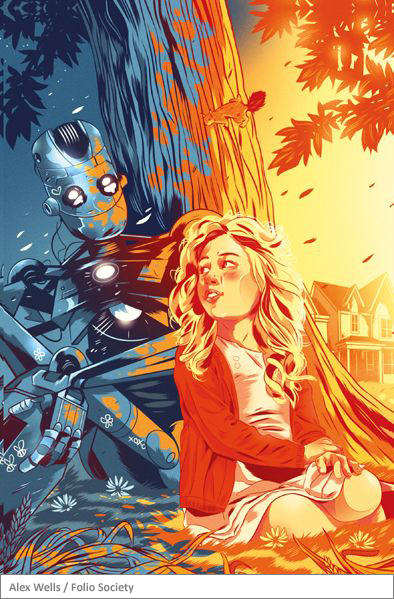
The story portrays Mrs. Weston as a person who is more strict and concerned about societal pressures. She is not a bad person, she just wants the best for her daughter. Only that she cannot accept that Robbie the robot might be just what Gloria needs. The father comes across as a man who is less concerned because he knows that Robbie makes his daughter happy. In the end, he is the one to take action and give Gloria her friend back. Even though he is described as being a business man, he is not the parent who is stern and restrictive. While being a housewife Mrs. Weston is less warm and caring. This is a good reversal of the traditional characterization of parents and gender roles.
Mrs. Weston raises the idea that people are afraid of robots and that something dangerous could go wrong. This is when Mr. Weston reminds her that the laws of robotics will prevent Robbie from ever harming their daughter. In the end, Robbie does indeed comply with the first law of robotics by preventing Gloria from getting hurt. The other way to look at that is that Robbie cares for Gloria and would have saved her regardless of the laws.
The story does raise a good question, in that how much exposure to technology is too much? At what point will technology turn on people? Robbie is always depicted as a semi-shy robot that enjoys hearing stories and likes to gently play with his friend Gloria. He is never shown as doing anything to disobey his human owners. In the revision of the story, there is a scene in a museum in which Gloria approaches a machine that is called "The Talking Robot". That "robot" is merely a mechanical machine that can talk and spout off random facts and answer simple questions. However, when faced with the notion that it, it not unique but a part of a group known as robots, the machine breaks down. This is the only sign that there could be potential problems for robots. These ideas are explored more in the rest of Asimov's works in "I, Robot".
Thoughts
This is a story that I really enjoy because as a woman it reminds me of when I was a little girl and really attached to my things. I never had a robot, but I did have hamsters and I was so sad every time one died I got a new one to try to replace it. For anyone that has something they love taken away from them suddenly, you can relate to that feeling of sadness that Gloria has. In this case, the story does have happy ending, which is something I like to see in science fiction stories.
The ending was a bit of a surprise and it was nice that the father arranged for a reunion between Gloria and Robbie. I really like that the father doesn't judge Gloria's relationship with Robbie and he just wants his little girl to be happy. Again that appeals to the little girl in me that loves her dad. I also like the settings in the story. First being the country house, then in New York we get the museum and the robot factory. This is a story that moves and travels and in doing so makes it feel real.
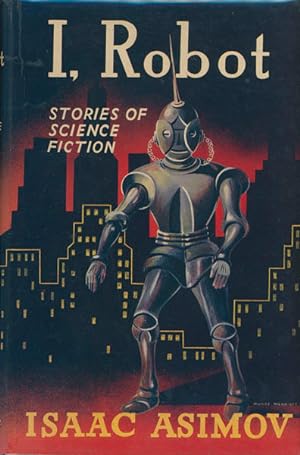
The other thing I like is the idea of robots in existence in what feels like a story set in the 1950's. The story states that Robbie is a robot who was built for and sole purpose is to be a companion for a child. At the factory, there is mention that robots can be used as labor workers. So there are many different types of robots that exist in this world. I have not read the "I, Robot" series but if it delves deeper into this world and setting with the laws of robotics, I think I would really enjoy those stories.
Follow me on Twitter @AshlieKManger and on Instagram @fantasic_literature ask me questions, share your thoughts about the stories I've reviewed or make suggestions for future stories. Thank you for reading!
Wednesday, October 12, 2016
Science Fiction Short Stories
Hello Readers!
Starting this week I will be reviewing Science Fiction short stories. To kick things off I'm going to be reviewing the story "Robbie" by Isaac Asimov. One of the most notable and influential science fiction writers of the late 20th century. Personally, my favorite science fiction writer is Jules Verne, and I will get to him a bit later.
Science fiction is an expansive genre that encompasses many elements. It looks at science and technology and imagines a world that is more advanced or would be considered impossible (or highly unlikely) by scientific standards. Anything from robots to space, if you enjoy science fiction then I encourage you to read these short stories. If you have a favorite science fiction short story please recommend it to me.
Start off by reading the story of "Robbie" and then come back on Friday to read my review. You can follow the blog on Twitter @BelleArboreus and on Instagram @Fantastic_literature
Read "Robbie" Here, pg 5
Starting this week I will be reviewing Science Fiction short stories. To kick things off I'm going to be reviewing the story "Robbie" by Isaac Asimov. One of the most notable and influential science fiction writers of the late 20th century. Personally, my favorite science fiction writer is Jules Verne, and I will get to him a bit later.
Science fiction is an expansive genre that encompasses many elements. It looks at science and technology and imagines a world that is more advanced or would be considered impossible (or highly unlikely) by scientific standards. Anything from robots to space, if you enjoy science fiction then I encourage you to read these short stories. If you have a favorite science fiction short story please recommend it to me.
Start off by reading the story of "Robbie" and then come back on Friday to read my review. You can follow the blog on Twitter @BelleArboreus and on Instagram @Fantastic_literature
Read "Robbie" Here, pg 5
Subscribe to:
Posts (Atom)