Fan-Lit

Welcome Everyone!

Welcome Everyone!

Thanks for visiting my blog where I review books and stories. I am a published author and I have a Master's Degree in English and Creative Writing. Some of my favorite books are "The Hunger Games" series, the "Percy Jackson and the Olympians" series and Brandon Sanderson's "Skyward" series. I love to read and write short stories; as well as discuss writing and literature in any medium. Hope you enjoy and feel free to comment and make recommendations.


Wednesday, November 16, 2016

Review for "An Express of the Future"

An Express of the Future by Jules Verne was first published in "The Strand Magazine" in 1895.


Summary
The story starts with an unnamed gentleman being escorted onto a train by the conductor, Colonel Pierce. The man does not remember why or how he got there and has a hard time believing what the conductor is telling him. Colonel Pierce explains to the man that he is on a train leaving a station in Boston, traveling underwater to Liverpool, England. The man recalls reading an article about the construction of this train and thought it was unbelievable. The conductor explains to the man how the train was built and how it works. The train travels at 1,800 kilometers per hour and takes about two hours and forty minutes to make the trip. The man asks questions, such as how can the train stop at such fast speeds without being destroyed. The conductor tells him about how the tunnels were constructed and the use of air in slowing down the train. After he is shown the passengers carriage the man asks when the train will start moving, and the conductor responds by saying the train hs already begun. The man felt no movement and could not believe this. After feeling wetness on his eyebrow the man assumes there is a crack in the tube and that the under water pressure was too much. A sense of fear overcame him and he woke up in his garden with a magazine by his side discussing the project of Colonel Pierce.

Analysis
The fact that the man was dreaming in the end was a bit of a surprise but not to be unexpected. There are a few clues that tip the reader off that something isn't right. The story starts off with the man not knowing where he is or why. That is the first clue that something is wrong. The conductor, Colonel Pierce, appears to know everything about the construction of the train tunnel system and remains optimistic and upbeat. This is because he is a character in a dream.

There is a bit of irony in the idea that this is a science fiction story that someone else is having inspired by what they read in a magazine. It is a bit meta and possibly Jules Verne saw himself as the lead character in the story. 

Thoughts
While the plot summary for this story is rather short, it's the details that capture the readers imagination. What if a train could travel underwater across the Atlantic ocean in under three hours? While this idea is a large scale structure, there is already smaller scales in real life where trains run underwater. The most notable is the tunnel that runs under the English channel that stretches over 30 miles underwater. This is a real life application of what was considered science fiction around the turn of the 20th century. Probably the greatest thing about science fiction is taking what seems impossible (and only exists in our imaginations) and making it a reality.

Since the story was written in the 1890's the technology for trains was still limited to steam engines crossing vast lands. There was nothing like a pneumatic system and certainly no trains the traveled underwater. Verne was simply looking to the future of what train travel could be in the future. The story is set on a train because that was the primary method of transportation for large groups of people during that time. The idea that the train can be propelled by air is not that far stretched and is even similar to the Hyperloop that Elon Musk proposed recently. Which would allow people to travel to travel from southern California to Northern California in a short time. A trip that is over 6 hours long by car.

What I like about this story is that it takes place in a future time where this kind of technology is a possibility. At the end we find out it is not the reality but it is something that could become real in the future in the story's world. I would love to see more from this futuristic world that Verne has created. Are there other major technological advances in this world? Or is this a steampunk setting where the world is still in the 1800's the only difference is this train? Seeing as this is Jules Verne I'm more inclined to think it's the later.

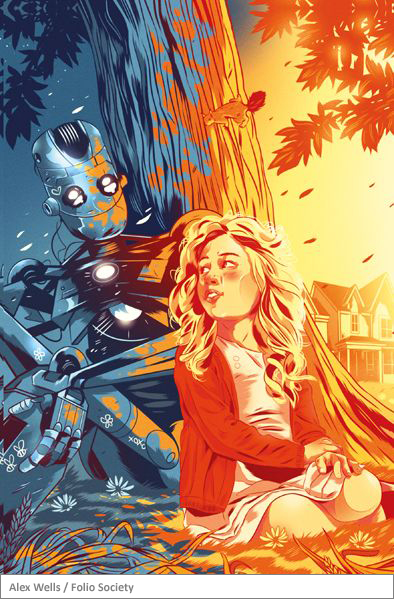
 Be sure to comment below and give me your thoughts about the blog. Recommend some stories to review. You can also follow me on Instagram where I post some artwork related to the story reviews, like the one above, @fantastic_literature and on  Twitter @BelleArboreus. 

Next time we will be discussing the works of another science fiction great! H.G. Wells' short story, The Star.

Monday, November 7, 2016

Jules Verne and Science Fiction.

So the next review is going to be "An Express of the Future" by Jules Verne. You can read the story here Read An Express of the Future . I would just like to talk a little bit about Jules Verne and science fiction stories in general.

Jules Verne is one of my favorite science fiction authors. As a former Geology major, I really love the book Journey to the Center of the Earth. While it might not be scientifically sound, it is a great "what if" story. Verne's style is not about the science fiction that changes this world, but rather to explore the world and find the science in it. What I really like about the short story An Express of the Future is that is not a big science fiction plot. It's small and simple about an underwater train that travels across the Atlantic ocean. There is even a real world comparison with the tunnels that go under the English Channel, connecting the UK to the rest of Europe. Obviously, there are differences between a short tunnel and one that would cross the entire Atlantic, but it is a fantasy that we can all dream of. That's what I like about Verne's writing, using science fiction to explore our fantasies. Since Verne wrote in the 1800's the technology and information available were limited, so there is an element of the Steampunk style to his works.

Science fiction is a big genre and basically means anything that is based on science that is either impossible or highly unlikely (at least in the time it is written). I think when Verne wrote 20,000 Leagues Under the Sea, submarine ships were either not invented or not developed for deep seas exploration. So at the time the Nautilus was looked at as science fiction. Whereas some science fiction writers focused on robots, monsters or aliens, Verne focused on taking a journey in the world exploring science and making discoveries. There is always an element of optimism and wonder in the stories. Unlike H.G. Wells who writes stories that explore the dark sides of science fiction. While both men are considered among the great science fiction writers of all time, I tend to prefer the adventurous and lighter stories of Verne.

Last week I wrote a review of "Robbie" by Isaac Asimov, who is also considered to be a great writer of science fiction along with Philip K. Dick and H.P. Lovecraft. I have not read much of these three authors. When I get the chance to read more of their works I will add them to my science fiction list of reviews. If anyone has an recommendations by these authors or other science fiction authors please let me know.

You can follow me on Twitter and Instagram @BelleArboreus and @fantastic_literature Go ahead and read An Express of the Future and come back on Thursday for the review!

Wednesday, November 2, 2016

Review for "Robbie" by Isaac Asimov

Review of "Robbie" by Isaac Asimov

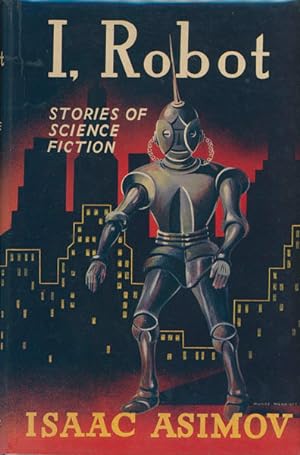
"Robbie" by Isaac Asimov was published in 1940 originally titled "Strange Playfellow" in the Super Science Stories magazine. It was revised and retitled for Asimov's book "I, Robot". This revision includes an additional scene that contains a character that recurs throughout the other stories in the "I, Robot" collection of stories. 

Asimov is known for his book "I, Robot" which is a collection of stories about robots. He created his own rules known as "the three laws of Robotics". Which are as follows:


  1. A robot may not injure a human being, or, through inaction all a human to come to harm.
  2. A robot must obey the orders given it by humans except where such orders would conflict with the First Law.
  3. A robot must protect its own existence as long as such protection does not conflict with the First and Second Law. 

Summary
Outside a house in the country, a little girl named Gloria is playing hide and seek with her robot friend she calls Robbie. When called by her mother to the dinner table, Gloria insists that Robbie stay with her so she can finish telling him the story of Cinderella. Her mother, Mrs. Weston says no and that if Robbie does not leave now, then Gloria cannot play with him for a week. Later that night Mrs. Weston told her husband that she wants to get rid of Robbie because she wants Gloria to grow up normally. Mr. Weston says no and after a few weeks continues to say no to Mrs. Weston's request. Until one day they take Gloria out to a show and when they return Robbie is gone. Clearly upset, Gloria mopes around the house for a month.

In order to get over Robbie, Mrs. Weston convinces her husband to take a trip to New York city. Gloria is excited to go, but only because she thinks they are going to look for Robbie. After a month in the city, taking in shows, and visiting museums and zoos, Gloria is still not happy. Mr. Weston decides to take Gloria on a tour of a robot factory. Mrs. Weston thinks that will help Gloria get over Robbie. When they get there they find robots that are helping build other robots. Gloria looks in the crowd of workers and there she sees her robot, her friend, Robbie. She runs to him but does not see a tractor coming her way. Mr. Weston makes a move towards his daughter but Robbie is closer and rushes at the girl. He then grabs her just before the tractor goes by. Gloria and Robbie hug, and Mrs. Weston finally decides that he can stay.


Analysis

The story portrays Mrs. Weston as a person who is more strict and concerned about societal pressures. She is not a bad person, she just wants the best for her daughter. Only that she cannot accept that Robbie the robot might be just what Gloria needs. The father comes across as a man who is less concerned because he knows that Robbie makes his daughter happy. In the end, he is the one to take action and give Gloria her friend back. Even though he is described as being a business man, he is not the parent who is stern and restrictive. While being a housewife Mrs. Weston is less warm and caring. This is a good reversal of the traditional characterization of parents and gender roles.

Mrs. Weston raises the idea that people are afraid of robots and that something dangerous could go wrong. This is when Mr. Weston reminds her that the laws of robotics will prevent Robbie from ever harming their daughter. In the end, Robbie does indeed comply with the first law of robotics by preventing Gloria from getting hurt. The other way to look at that is that Robbie cares for Gloria and would have saved her regardless of the laws.

The story does raise a good question, in that how much exposure to technology is too much? At what point will technology turn on people? Robbie is always depicted as a semi-shy robot that enjoys hearing stories and likes to gently play with his friend Gloria. He is never shown as doing anything to disobey his human owners. In the revision of the story, there is a scene in a museum in which Gloria approaches a machine that is called "The Talking Robot". That "robot" is merely a mechanical machine that can talk and spout off random facts and answer simple questions. However, when faced with the notion that it, it not unique but a part of a group known as robots, the machine breaks down. This is the only sign that there could be potential problems for robots. These ideas are explored more in the rest of Asimov's works in "I, Robot".


Thoughts
This is a story that I really enjoy because as a woman it reminds me of when I was a little girl and really attached to my things. I never had a robot, but I did have hamsters and I was so sad every time one died I got a new one to try to replace it. For anyone that has something they love taken away from them suddenly, you can relate to that feeling of sadness that Gloria has. In this case, the story does have happy ending, which is something I like to see in science fiction stories.

The ending was a bit of a surprise and it was nice that the father arranged for a reunion between Gloria and Robbie. I really like that the father doesn't judge Gloria's relationship with Robbie and he just wants his little girl to be happy. Again that appeals to the little girl in me that loves her dad. I also like the settings in the story. First being the country house, then in New York we get the museum and the robot factory. This is a story that moves and travels and in doing so makes it feel real.


The other thing I like is the idea of robots in existence in what feels like a story set in the 1950's. The story states that Robbie is a robot who was built for and sole purpose is to be a companion for a child. At the factory, there is mention that robots can be used as labor workers. So there are many different types of robots that exist in this world. I have not read the "I, Robot" series but if it delves deeper into this world and setting with the laws of robotics, I think I would really enjoy those stories.


Follow me on Twitter @AshlieKManger and on Instagram @fantasic_literature ask me questions, share your thoughts about the stories I've reviewed or make suggestions for future stories. Thank you for reading!


Wednesday, October 12, 2016

Science Fiction Short Stories

Hello Readers!

Starting this week I will be reviewing Science Fiction short stories. To kick things off I'm going to be reviewing the story "Robbie" by Isaac Asimov. One of the most notable and influential science fiction writers of the late 20th century. Personally, my favorite science fiction writer is Jules Verne, and I will get to him a bit later.

Science fiction is an expansive genre that encompasses many elements. It looks at science and technology and imagines a world that is more advanced or would be considered impossible (or highly unlikely) by scientific standards. Anything from robots to space, if you enjoy science fiction then I encourage you to read these short stories. If you have a favorite science fiction short story please recommend it to me.

Start off by reading the story of "Robbie" and then come back on Friday to read my review. You can follow the blog on Twitter @BelleArboreus and on Instagram @Fantastic_literature

Read "Robbie" Here, pg 5

Saturday, September 24, 2016

Review for "The Damned Thing"

Review of "The Damned Thing" by Ambrose Bierce

First published in 1892 in the journal Tales From New York Town Topics, vol. 30, no. 23.


Summary
The story opens in a log cabin with nine men in the room. One reading from a book and seven lined up against the wall. The last man was lying on the table, dead. The deceased man was Hugh Morgan owner of the cabin. The man reading the book was the coroner and the other men were the jurors. An inquest was being held to determined the cause of death for Mr. Morgan. The men were waiting for the eyewitness, William Harker.

When he enters the room and he is asked to give his account of what happened to Mr. Morgan. Harker tells the men that he was out hunting with Mr. Morgan when the men noticed they were being watched by some sort of beast. He recalls that Morgan referred to it as "that damned thing". The two men were then attacked by the mysterious beast. Harker says that he was cast aside to the ground and watched as Morgan appeared to be having convulsions. By the time he checked on the man, he was already dead. Harker mentions that he never actually saw anything attack Morgan but that there were odd illusions as if there was something invisible in the fields.

One of the jurors asked Harker if he had been released from a mental institution because his story sounded absurd. The jury decides that Mr. Morgan had been killed by a mountain lion. It is then revealed that the coroner had been reading Mr. Morgan's diary which talks about Morgan's encounters with something invisible that he calls "that damned thing". The coroner did not include the diary as evidence in the inquest because he thought that it would not have changed the juror's minds. In the diary, Mr. Morgan concludes that the damned thing is real but is a color that is not on the visible light spectrum so that people cannot see it with their eyes.

Analysis
There are four parts to the story. The first part sets up the location and the reason for the investigation. The second part is the account of Mr. Harker's story. The third is the deliberation of the jury and the fourth is the reveal of Mr. Morgan's diary entries. Breaking the story up into these four parts is a great story telling device. It slowly reveals bits of information about Mr. Morgan's death without slowing down the pace of the story.

It is set in a small cabin that serves as the location for the inquest of Morgan's death. This confined space adds to the tension and mystery of solving the man's death. There is a sense of urgency, secrecy and an element of the unknown that give the story a darker tone.

The coroner is described as a man that is "worldly" but does not dress as fancy as the people in the city. From the beginning he is told to be reading a book, we find out later that is is the diary of Mr. Morgan. So he knows that the story Mr. Harker is telling to be true but does not admit the book into evidence for the jury to read. He claims that it is because the jury would find Mr. Morgan to have been mad and not consider what was written as proof of what caused his death.

The other possibility is something darker. Could the coroner have somehow already known about the invisible creature and is merely trying to cover up the death? There is no evidence to support this but it could have made for a great twist.

The story plays with the idea of people beginning crazy for believing in what is not seen. William Harker is accused of escaping from an Asylum and the coroner hides the diary from the jury. What we know from the diary entries is that Morgan believed in the idea of an animal that was invisible because it was a color that the human eye could not see. He recalls that his dog could somehow sense the beast as well. This could mean that Harker and Morgan we're not crazy and that there really is an invisible animal out in the woods.

This concept can be a reflection of the idea that people fear what they cannot see. The hardest things in life are the problems created by the things that people cannot see with their eyes. Or the things that we have trouble facing. Fear, loneliness and regret could have been problems for Mr. Morgan and the the creature is just the metaphor for all of that. Ultimately he was killed by something he could not see coming.


Thoughts
At first reading this story I really liked the setup in the first paragraph. It starts off with a man reading a book, then there are eight other men and then reveals that one of them is dead. Instead of just saying who all the men were in the opening sentence the story takes it's time to build an atmosphere.

I was surprised by the ending because I almost expected Mr. Morgan to have been killed by Mr. Harker, It was suggested that Harker might be crazy and he recognized Morgan's diary. I was not expecting "the damned thing" to have been real and invisible. If anything I thought it would have been some mythical monster lurking in the woods. Which it still could be and I like the idea that the color of the animal is just not able to be seen with human eyes.

That idea reminds me of the movie Pete's Dragon. Where a little boy is the only person that can see an invisible dragon. Perhaps the reasoning for this is that the dragon is a color that the human eye cannot detect and that the boy may have some enhanced eyes. It's an interesting explanation for sure.

All in all, I really enjoyed this story the second time around. I really like the structure and slow reveals of information. There is no twist in the end, it is fairly straightforward with the cause of death. It's a solid story with a few minor things that bothered me but I still think it's worth a read for anyone that likes dark fantasy stories.

 As always if you are enjoying this blog then please post your comments, feedback and thoughts. Thanks!
"The Damned Thing" by Ambrose Bierce. First published in 1892 in the journal Tales From New York Town Topics, vol. 30, no. 23.

Summary
The story opens in a log cabin with nine men in the room. One reading from a book and seven lined up against the wall. The last man was lying on the table, dead. The deceased man was Hugh Morgan owner of the cabin. The man reading the book was the coroner and the other men were the jurors. An inquest was being held to determined the cause of death for Mr. Morgan. The men were waiting for the eyewitness, William Harker.

When he enters the room and he is asked to give his account of what happened to Mr. Morgan. Harker tells the men that he was out hunting with Mr. Morgan when the men noticed they were being watched by some sort of beast. He recalls that Morgan referred to it as "that damned thing". The two men were then attacked by the mysterious beast. Harker says that he was cast aside to the ground and watched as Morgan appeared to be having convulsions. By the time he checked on the man, he was already dead. Harker mentions that he never actually saw anything attack Morgan but that there were odd illusions as if there was something invisible in the fields.

One of the jurors asked Harker if he had been released from a mental institution because his story sounded absurd. The jury decides that Mr. Morgan had been killed by a mountain lion. It is then revealed that the coroner had been reading Mr. Morgan's diary which talks about Morgan's encounters with something invisible that he calls "that damned thing". The coroner did not include the diary as evidence in the inquest because he thought that it would not have changed the juror's minds. In the diary, Mr. Morgan concludes that the damned thing is real but is a color that is not on the visible light spectrum so that people cannot see it with their eyes.

Analysis
There are four parts to the story. The first part sets up the location and the reason for the investigation. The second part is the account of Mr. Harker's story. The third is the deliberation of the jury and the fourth is the reveal of Mr. Morgan's diary entries. Breaking the story up into these four parts is a great story telling device. It slowly reveals bits of information about Mr. Morgan's death without slowing down the pace of the story.

It is set in a small cabin that serves as the location for the inquest of Morgan's death. This confined space adds to the tension and mystery of solving the man's death. There is a sense of urgency, secrecy and an element of the unknown that give the story a darker tone.

The coroner is described as a man that is "worldly" but does not dress as fancy as the people in the city. From the beginning he is told to be reading a book, we find out later that is is the diary of Mr. Morgan. So he knows that the story Mr. Harker is telling to be true but does not admit the book into evidence for the jury to read. He claims that it is because the jury would find Mr. Morgan to have been mad and not consider what was written as proof of what caused his death.

The other possibility is something darker. Could the coroner have somehow already known about the invisible creature and is merely trying to cover up the death? There is no evidence to support this but it could have made for a great twist.

The story plays with the idea of people beginning crazy for believing in what is not seen. William Harker is accused of escaping from an Asylum and the coroner hides the diary from the jury. What we know from the diary entries is that Morgan believed in the idea of an animal that was invisible because it was a color that the human eye could not see. He recalls that his dog could somehow sense the beast as well. This could mean that Harker and Morgan we're not crazy and that there really is an invisible animal out in the woods.

This concept can be a reflection of the idea that people fear what they cannot see. The hardest things in life are the problems created by the things that people cannot see with their eyes. Or the things that we have trouble facing. Fear, loneliness and regret could have been problems for Mr. Morgan and the the creature is just the metaphor for all of that. Ultimately he was killed by something he could not see coming.

Thoughts
At first reading this story I really liked the setup in the first paragraph. It starts off with a man reading a book, then there are eight other men and then reveals that one of them is dead. Instead of just saying who all the men were in the opening sentence the story takes it's time to build an atmosphere.

I was surprised by the ending because I almost expected Mr. Morgan to have been killed by Mr. Harker, It was suggested that Harker might be crazy and he recognized Morgan's diary. I was not expecting "the damned thing" to have been real and invisible. If anything I thought it would have been some mythical monster lurking in the woods. Which it still could be and I like the idea that the color of the animal is just not able to be seen with human eyes.

That idea reminds me of the movie Pete's Dragon. Where a little boy is the only person that can see an invisible dragon. Perhaps the reasoning for this is that the dragon is a color that the human eye cannot detect and that the boy may have some enhanced eyes. It's an interesting explanation for sure.

All in all, I really enjoyed this story the second time around. I really like the structure and slow reveals of information. There is no twist in the end, it is fairly straightforward with the cause of death. It's a solid story with a few minor things that bothered me but I still think it's worth a read for anyone that likes dark fantasy stories.

So, I'll be taking a week off to catch up on some of my readings and focus on school. I'll be back the first week of October and I'm going to switch gears a bit and start doing Science Fiction short stories. When I figure out which one I'm going to do first I'll make a post, so that you guys can read it before my review. As always if you are enjoying this blog then please post your comments, feedback and thoughts. Thanks!


Thursday, September 22, 2016

Delayed Review

Sorry for another delay. It's been a busy week. I will have the review up on Saturday Sept.24th. In the mean time make sure to read the story as I forgot to post the link last week. 

Then come back and check out the review. Read "The Damned Thing" here 


Saturday, September 17, 2016

Review for "The Gray Wolf" by George MacDonald

This review is for "The Gray Wolf" by George MacDonald. 
First published in 1871 as a part of the Works of Fancy and Imagination collection. If you haven't read this, here's a link to read it online. https://fullreads.com/literature/the-gray-wolf/


Summary
A male student wanders away from his group and winds up on a small island in the Shetland island region Northeast of Scotland. Clearly lost, he finds a cave and then meets a woman in the shadows. She tells him that her mother can offer him shelter for the night at their cabin. He joins them for dinner and the woman stares at him. He notices that she looks at him hungrily and she stops to leave the cabin. She comes back later looking better than before she left. The man then has a drink of alcohol with the lady. He thinks he sees the woman's face begin to transform but claims it's just the whiskey playing tricks on his mind. The woman then leaves the house again. Later the man lays down to go to sleep when he hears the sound of dog feet at the front door. He turns around to look, but only sees the woman entering the house. He watches her lay down on the bench and starts to close his eyes when he thinks he sees the feet of a giant dog at the foot of the table. Again the woman leaves the house and he falls asleep.

Later he wakes up to a wolf trying to kill him. He fights back by choking the beast and stabbing it in the arm. The wolf leaves and the man decides to stay awake through the night. In the morning the mother tells him her daughter is still asleep. A bit later the daughter walks into the house and the man notices that she has wounds on her arm and her neck is covered up. The mother tells the man that he needs to leave and the woman continues to stare at him. The mother goes to attack her daughter, the man intervenes and notices the handprint marks on the woman's neck. In shock that he has figured out what was going on, he runs out of the house. He looks back to find the mother dead and the wolf chasing him. He continues to run and passed the cave. When he stops again he looks back he sees the woman standing there doing nothing but letting him escape.

Analysis
The story takes place on the Shetland islands, which are fairly remote. We are told the man is a student and has been separated from his companions. But what was he doing on the island to begin with and how did he get lost? The island could represent the isolation that the woman must live in to ensure that she does not harm other people.

In the cave the man steps on the bones of dead animals just before meeting the woman. It can be inferred that the wolf is the one that killed the animals. Does that mean upon seeing the man, she changed back into a woman? Or did she just wake up as a woman when she heard the man stirring about in the cave? Perhaps this is the cave that she goes to whenever she leaves the house. It's also never made clear if the mother knows about her daughter's condition.

The occurrences in which the woman transforms into the wolf seem to be uncontrolled and random. However, she also shows restraint and sorrow for her actions. When the wolf inside of her gets hungry the woman leaves the cabin and returns later. This suggests that she went to feed her inner beast. Perhaps she can sense when she is about to transform but cannot fully control it. It appears that she does not want to hurt the man. When he leaves he looks back presumably to find the wolf chasing him, but instead sees the woman watching him leave. 
 
At the end of the story the woman he is being chased by the wolf one minute, then briefly comforting the crying woman the next. Only to be chased by the wolf again. It's almost as if the woman was able to break away from the wolf long enough to try and tell him she was sorry. If there is any journey for the two characters then the ending is where it culminates. However, there is not enough development in either character to suggest that anything has really changed or that they have learned anything significant. It makes it hard to find the theme of the story. 


Thoughts
So in my text book, this story is listed under the category of "High Fantasy", which I find to be odd. The story contains elements that are more similar to dark fantasy. The dark isolated setting and misunderstood magic. That's why I've included it in my dark fantasy reviews.

The story can be seen as a role reversal of the classic Red Riding Hood fairy tale. Instead of the girl being the victim, she is the wolf and the man is food. When first reading this story, it did remind me of Red Riding hood but the version from the television show, Once Upon A Time. For those that have seen that show, you will know what I am talking about.

The term bewitched is used to describe the effect the girl has on the wanderer. Could that be a literal witching? Is this a way of saying there is a magical reason for her turning into a wolf? There are several questions that the story raises but never quite answers. There is no reason given for the woman turning into a wolf and it's never clear how much control she has over it. What's her connection to the man? Does she not want to eat him because she likes him, or just because she does not want to harm any living person? The story almost suggests it's the former idea but never states it.

While I do enjoy reading this story, it does have a lot of problems and plot holes that are annoying. However if you are a fan of wolf transformation tales then give this one a try and see what you can get out of it. If there is anything that I didn't catch that you did please share your thoughts in the comments below. Or if you have any feedback about my blog in general please let me know. If you like this blog then share it on social media. You can follow me and tweet me @BelleArboreus on Twitter.


Wednesday, September 14, 2016

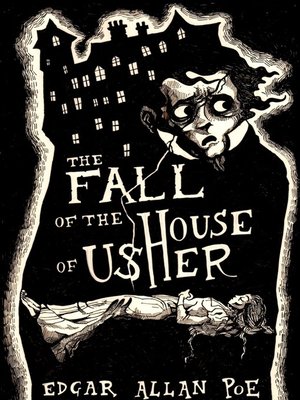
Review for "The Fall of the House of Usher" by Edgar Allan Poe

"The Fall of the House of Usher" by Edgar Allan Poe. Published in 1839 in Burton's Gentleman's Magazine.


Summary

The house of Usher is an old building that the narrator describes as being dilapidated and gives him an unnerving feeling. While the house is mostly solid there is a crack in the roof. After receiving a letter from his ill friend, Roderick Usher, the narrator decides to stay at the mansion to provide his company. The Usher's are said to be a declining family that is deeply tied to the estate. Shortly after arriving the narrator finds out that Roderick has a sister who is dying of a mysterious illness. The narrator notices that his friend is looking pale and sick but does his best to keep him entertained with music and books. After Roderick declares his sister dead, the two men decide to entomb her body in a dark, damp and secluded part of the house. One night while reading a story to Roderick, the narrator starts to hear noises that begin to worry him. Roderick reveals that he has been hearing weird noises for days. He believes that they buried his sister alive and now she is back for revenge. When the two men see the girl in the doorway, she is bloodied and angry. She attacks her brother and they both die in the fight. In shock, the narrator runs out of the house and behind him, it begins to fall apart from the crack in the roof. The house then collapses to the ground and the "House of Usher" is no more.

Analysis
Edgar Allan Poe is known for this gothic setting and this story certainly, has that feel to it. The story is set in an old run down house. It gives the story and eerie calm feeling that never quite settles until the house falls in the end. When the narrator first views the house it invokes a feeling of despair, almost as if the house itself can share the feelings of the ill Usher siblings. Poe uses the house as a metaphor for how the Usher's are feeling. Almost as if the house is its own entity that can empathize with Roderick.

The narrator also describes the house as having "eye-like windows" more than once. This suggests that the house has features of a human. The personification of the exterior provides symmetry with the way the house "behaves". Almost as if it represents the emotions of its owner.

Roderick himself can be seen as a hypochondriac. He becomes ill because he thinks he should be ill therefore he does become ill. He creates his own self-fulfilling prophecies. He thinks he should bury his sister alive so he does. The house of Usher is a play on words. It means both the literal house of the Usher family as well as the bloodline of the family. The mental and physical disorders that haunt the family then manifest in the structure of the house.


Thoughts
One thing that I noticed was that the narrator tries to be an optimist. He describes the exterior of the house as run down and dilapidated. In contrast to his description of the interior as being more ornate and beautiful. He does something similar describing his friend's facial features. He points out the flaws only after talking about his friend's more handsome features. I find this to be an interesting connection. He sees what is there but also finds the beauty in things.

I was a bit surprised at the end of the story when the house finally falls to the ground. It was a good twist to have the sister return from the dead, but I was not surprised that Roderick died. From the beginning he seemed like a troubling man, crippled by his illness. The story itself is fairly dense and required a bit of rereading for me to fully understand what was going on. That said this is a subtly horrific story and Poe tells it very well. I don't enjoy it as much as "The Masque of the Red Death", but it excels as a character study. The story paints a disturbing picture of what can happen to people who are left alone to go mad with an illness.

As I was reading the story I realized that I was stopping (very often) to look words up in the dictionary. I decided to compile a glossary of those terms for anyone else who might have had trouble reading this story. Perhaps it's just me and I need to read a dictionary more, but for those that had trouble here is a list of the words I found difficult to understand.


Glossary
Sedges: A grass plant that grows in a marsh-like environment.
Precipitous: Very steep or sudden.
Sojourn: A temporary place of stay. Like a traveler or guest.
Importunate: Repeated annoyance or demands. Being troublesome.
Munificent: Giving or bestowing generosity.
Unobtrusive: The opposite of obtrusive. Inconspicuous or not attracting attention.
Appellation: An identifying name or title.
Specious: Deception. Appearing to be true when actually false.
Countenance: Expression of a person's face.
Tenuity: Lack of strength or being thin.
Gossamer: Light or delicate material, like silk.
Arabesque: A decorative design ith several lines that curve across each other.
Insipid: Lacking qualities of interest. Boring, bland or dull.
Abhorrence: To abhor. In loathing or strong dislike.
Equivocal: Having multiple meanings or not easily understood.
Emaciated: To waste away physically or be made weak.
Dirges: A burial hymn or lament for the dead.
Quaver: To make a trembling sound.
Vagaries: An erratic action or unpredictable.
Miasma: Cloud or vapor that is unhealthy. Like a toxic fog.
Uncouth: Being not polite or rude that is not socially acceptable.

Ok so there you have it. Now that you have read the review and the glossary hopefully you can read the story again with a better understanding of the narrative. The next short story will be The Gray Wolf by George MacDonald.

Thursday, September 8, 2016

Another delay

I apologize, there will not be a new post going up today for "The Fall of the House of Usher". I will try to get it up my Monday or Tuesday, Sept 13th. I will also try to still do a new review next Thursday (15th) as well. For the short story "The Gray Wolf" by George MacDonald. So check back in next week for those two new reviews. Again I apologize for the delay, have a great weekend!

Thursday, September 1, 2016

Review for "The Monkey's Paw" by W.W. Jacobs

A review of "Monkey's Paw" by W.W. Jacobs

"The Monkey's Paw" was written by W.W. Jacobs in 1902 and first published in Harper's Magazine vol. 105. If you have not read the story do so first and then come back to the review. It contains spoilers.
Read "The Monkey' Paw" Here


Summary
One cold night a small family receives a visit from Sergeant Major Morris, an old friend of the father. He brings with him a magical monkey's paw from India. The paw is said to be cursed to grant three wishes to three men and has already been used by a previous man and the Sergeant Major. Having no need for the monkey's paw, the father takes it from his friend. The gentleman tells the father to burn the monkey's paw because it brings misery. The father is then convinced by his son to wish for two hundred pounds using the paw. The next day the family thinks the wish was not granted and the son goes off to work. Later that night the mother and father receive a notice, from their son's employer, that their son died in an accident at work. They are given two hundred pounds as compensation. A week later after their son's funeral, the mother asks her husband to wish for their son back.  He is hesitant but eventually wishes for his son to be alive again. Later that night there is an eerie knock at the door. Several knocks continue, harder and louder but not the sound of their son's voice. The father realizes it was a mistake. As the mother goes to open the door for her son, the father makes his third and final wish. He wishes to undo the second wish. The knocking on the door stops and the mother opens to find no one standing outside.

Analysis
The story begins and ends at night which gives it a dark tone. While the interior of the house is described as quiet and safe, the outside is cold, wet and dark. The contrasting setting represents the family and the outside influence that comes into their lives.

The irony of the story is that while the father got his wish of two hundred pounds, it comes at the price of his son's death. This idea follows a common rule in fantasy which is that the use of magic comes at a price. In dark fantasy stories, the price is usually death. The monkey's paw represents power. A power that tempts people and incites greed and selfishness. Mr. White tells his family that he does not know what to wish for because he has everything he already wants. Yet he is tempted by the power and encouraged by his family to make a wish. Which he chooses to do.

One of the theme's of the story is the recurring use of the number three. There are three wishes granted to three men. Three people in the White family. Sergeant Major tells Mr. White three times to burn the paw. Mrs. White begs her husband three times to make the second wish. The story itself is broken up into three parts. It could refer to the saying that the third time is a charm. Meaning that his first two wishes went wrong but he got the third one right. There are many speculations about what the number three could represent, some having to do with religion and Christianity.

Following this theme, there is a three beat that occurs within the story. The White's let Sergeant Major Morris into their home and brings them the monkey's paw. Which will prove to be something bad. Then they let in the lawyer, who brings them bad news in the form of their son's death. The last time they hear a knock at the door Mr. White assumes it is something bad, which leads him to make a decision about his third wish. Changing the pattern from bad to good.


Thoughts
I really enjoy reading this story because it is easy to relate and empathize with the family. I think most people would be tempted to use the monkey's paw and make a wish. It seems easy to want to wish for money but as we see in the story, that money has to come from somewhere and is that a risk you are willing to take? So the story offers some good moral questions to think about.

The ending of the story didn't come as a surprise to me, it actually was a bit familiar. I'm a huge fan of the show Buffy, the Vampire Slayer. *Spoilers* There is an episode that has a very similar ending to this story. So to me, I suspected that the figure at the door was not actually their son and that the father would decide to let go for good.

What I like about the story is the setting of the house. It's a bit out of the way, it's wet outside and lit by a fire. That combined with the idea of a magical monkey's paw just sounds like a great set up to me. I love the first act of the story with the Sergeant and his warning about the paw. I like this story as a dark fantasy piece that is very different for the gothic settings of Edgar Allan Poe.

There is a movie loosely based off this story, starring Stephan Lange that was made in 2013. At the time I am writing this post, I've not seen the movie but I plan to. If it was up to me I would have made it a period piece movie to add to the overall aesthetic and atmosphere of the setting.

That's it for my review, if you have any comments or other interpretations of the story please share it in the comments below. If you have any feedback about the blog or any stories you recommend let me know.