Fan-Lit

Welcome Everyone!

Welcome Everyone!

Thanks for visiting my blog where I review books and stories. I am a published author and I have a Master's Degree in English and Creative Writing. Some of my favorite books are "The Hunger Games" series, the "Percy Jackson and the Olympians" series and Brandon Sanderson's "Skyward" series. I love to read and write short stories; as well as discuss writing and literature in any medium. Hope you enjoy and feel free to comment and make recommendations.


Friday, August 6, 2021

The Chrysanthemums review

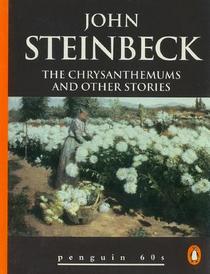
 "The Chrysanthemums" by John Steinbeck

Read "The Chrysanthemums" here
Buy "The Long Valley" here


"The Chrysanthemums" is a short story that fits in line with Steinbeck's other works and was a part of his collected stories in the book "The Long Valley", . It takes place on a ranch in the Salinas Valley and deals with unfulfilled dreams. Unlike Steinbeck's other works, the main character in this story is a woman. Elisa Allen is a rancher's wife who spends her time in her garden tending to her prized chrysanthemums. She watches her husband from afar, jealous of him in his business. A stranger pulls up in a wagon, and she becomes enamored with his life. She was longing to be on the road and meeting new people. The two flirt with each other, and after he leaves, Elisa gets ready to go out on the town with her husband, Henry.

Steinbeck was interested in the author D.H. Lawrence, and wrote "The Chrysanthemums" in the same vein as Lawrence's short story "Odour of the Chrysanthemums". Both stories deal with sexuality and balancing needs and self-interest (Charters, pg.222). 
The chrysanthemum flowers symbolize Elisa's "femininity and sexuality" and represent her caring nature (Kassim, 2021). The flowers become a stand-in for the children she wishes she could have someday. Elisa feels that she is in a romantic-less relationship with Henry and doesn't appreciate her female attributes. 

While Steinbeck has written female characters as flat and with a sexist point of view, this story surprises the audience with a strong female protagonist. "Steinbeck's sympathy and understanding for women are almost shockingly modern" (Sparknotes.com). Elisa is allowed to thrive in her garden, but he gives her a positive sexual desire not usually seen in works when the story was written. Unlike his other female characters, Elisa is not pregnant, nor does she and Henry have kids.

Ultimately, Elisa wants to feel beautiful and loved by her husband, who only points out her strong traits around the ranch. "Steinbeck uses Henry and the tinker as stand-ins for the" patriarchy. Henry ignores Elisa's potential and desire for a more exciting lifestyle. (Sparknotes.com). Elisa's passion for her flowers symbolizes her "intimacy with the rhythms of the natural world and represents" her innermost self (Charters, pg. 1508). The gardening metaphor extends to her ending, which can be seen as pruning away her romantic notions in order to blossom a new future for herself (Charters, pg. 1509).

During her encounter with the stranger or tinker, Elisa is attracted to him after he compliments her chrysanthemums. His appreciation of her hard work leads to a flirtatious conversation ending with Elisa hopeful that her life can change. She takes a bath to get ready for her night out with Henry. "Elisa sheds her old self by scrubbing and brings new life and change" (Kassim, 2021). She admires her body in the mirror before putting on a dress and makeup, hoping that this change will spark something in her marriage. However, Henry's compliments are less than flattering, and Elisa realized that her marriage would never be more excited. The best she can hope for is some wine with dinner.

In this story, Steinbeck's usual theme of the "American dream" is present in Elisa's longing to have children and be appreciated as a woman rather than a worker. One of the things that I enjoyed about this story was that it featured a strong woman with needs and desires. However, in the end, her passions are not met. Even though it was written in 1938, the story has a more modern feel, highlighting the life of a strong woman, even though she is still being held back. I thoroughly enjoyed reading this story. If you've read it, please leave your comments below, and let me know your thoughts on author John Steinbeck. Two more works left to review, so keep checking back and make sure to follow on Twitter for updates!


Works Cited

Sparknotes.com, 2021. https://www.sparknotes.com/short-stories/the-chrysanthemums/section1/, https://www.sparknotes.com/short-stories/the-chrysanthemums/themes/

Lone Star College, 2021. “Symbolism in The Chrysanthemums” by Elizabeth Kassim. https://www.lonestar.edu/symbolism-chrysanthemums.htm

"Part Two: Commentaries." The Story and Its Writer: An Introduction to Short Fiction, by Ann Charters, 9th edition. Bedford/St. Martins, 2015.


Wednesday, August 4, 2021

A Rose For Emily Review

 Review of "A Rose for Emily" by William Faulkner

You can read "A Rose for Emily" Here

A relatively short story, "A Rose for Emily", recounts the life and tragedy of an older woman who passed away. Lonely, Emily lived in a big house alone with only a manservant to take care of her. The town would often say "poor Emily" anytime something terrible happened to her, yet the town never actually reached out to Emily to help her. Emily's father died and left her the house. She almost had a lover to marry, but then he died, and Emily was teaching painting until her students got older and no new ones came in. The town often depicts Emily as a nuisance and wants to pass her off to her kin from Alabama. The ending of the story paints an even more tragic life for Emily.

This is only my second reading of Faulkner, and while there are some similarities to Barn Burning, I think "A Rose For Emily" is easier to read. Faulkner's style of writing tends to be a bit wordy and but it helps the reader imagine the story in their head. The story is told as town residents recount the life of Emily, from her father's death to her courtship with Homer Barron, then her life as a hermit. It's a well-written narrative device that allows for a shocking ending. The story takes place in a large house in the South, and since the subject is a dead woman, it has a gothic feel. Gothic novels focus on morbid and horrific situations often involving mysterious secrets set in mansions or castles, designed to hook the readers and leave them breathless (Sparknote.com, 2021).

According to Faulkner, the story is about a young woman with hopes and dreams that never come to fruition. Emily was a young girl that just wanted to be loved and yet was kept down by her father, then society (Charters, pg. 1425). The story describes the older Emily as obese and ugly. This depiction follows the sexist and patriarchal notion that a woman's worth lies in her youth and beauty. Emily being old and disgusting means that her life then has no value. Several times, it is mentioned that her family, the Grierson's, thought of themselves in high regard despite their actual social status. Emily holds onto her family's value because that is all she has left.

Another theme is change vs. tradition. The town is trying to change and modernize itself. Emily refuses to pay taxes based on an old verbal agreement with the long since dead mayor of the town. She refuses to have the town install a mailbox at her house, even though she doesn't even gather the mail from the post office. To Emily and the older men that gather in Confederate uniforms at her funeral, time is relative. "The past is not a faint glimmer but an ever-present, idealized realm" (Sparknote.com, 2021).


The story's tragedy comes through at the end when it is revealed that Emily killed her lover before he could leave her. The sad part is that it's implied that she would still lay down next to the dead body on the bed because she craved that affection. "She had broken all the laws of her tradition, her background, and she had finally broken the law of God too" (Charters, pg. 1425). The tragedy lies in the fact that a young Emily was hampered by her father and didn't have any family to help her after that. By the time she killed Homer, she had already compromised her traditions and religion and had no one else to turn to for support. The townsfolk, for all their complaining and gossip of Emily, never did anything to help her. In the end, the only love and affection she had came from the dead body of her lover.


It is a pretty engaging story of an older woman not loved by anyone but the talk of the town. While it does have elements of a Southern Gothic, it also feels in line with Faulkner's other works. The former mayor being Colonel Sartoris, a character in the previous story I read, "Barn Burning". Faulkner was known for creating stories in the same setting, and this feels like it's a continuation of "Barn Burning". Perhaps the young Colonel Sartoris from Barn Burning grew up to be the town's mayor in this story. A shorter read than "Barn Burning"; I recommend checking this one out.

Works Cited

Sparknotes.com, 2021. https://www.sparknotes.com/short-stories/a-rose-for-emily/section1/, https://www.sparknotes.com/short-stories/a-rose-for-emily/themes/

"Part Two: Commentaries." The Story and Its Writer: An Introduction to Short Fiction, by Ann Charters, 9th edition. Bedford/St. Martins, 2015.

Friday, July 30, 2021

Review of In Dubious Battle


Review of In Dubious Battle by John Steinbeck

Buy "In Dubious Battle" here

Author John Steinbeck is known for his "labor trilogy" books, Of Mice and Men, The Grapes of Wrath, and In Dubious Battle. While I did not enjoy The Grapes of Wrath as much as I wanted to, I enjoyed reading In Dubious Battle. This is the book that I thought The Grapes of Wrath would be, and it's the story that I wanted to read. The book is about the party organizers workers that want to unionize the labor workers on the farms. The main two characters are Mac and Jim Nolan.

The novel starts with Jim applying to be a part of the communist labor party organization. He then teams up with Mac, and they travel to Torgas valley. In the country, they try to get the labor workers to strike for higher wages. Most of the story takes place on a farm, where the strikers are allowed to set up camp. The whole story is about the workers' struggle to strike and fight for a fair working wage.


The book gets its title from John Milton's Paradise Lost. The quote is, "That durst dislike his reign, and, me preferring, His utmost power with adverse power opposed, In dubious battle on the plains of Heaven" (Milton). Steinbeck also references Milton's work by setting the novel in an apple orchard, symbolizing the garden of Eden. The Torgas Valley represents the figures of good and evil battling in Heaven (enotes.com).


A common theme in many of Steinbeck's works is the social injustice of migrant workers during the Great Depression. Steinbeck deals with the notion of a group of men banding together versus the individuality of men (enotes.com). Throughout the novel, Mac is constantly saying that if they could only rally the men together, changes can be made. At first, they have a hard time unifying the workers, but through some encounters with the local law enforcement, the men learn to work together. Unfortunately, the things that motivate the men the most are the deaths of key players fighting for organized workers. In the end, Jim dies when he was willing to dedicate the rest of his life to the cause. It's implied that his death will fuel the strike and could be the catalyst to winning the strike.


While the story is relatively simple, it's the characters that kept my interest. Some characters are similar to characters from The Grapes of Wrath, such as Jim, who could be almost a continued evolution of the character Tom Joad, jr., as well as Jim Casey. The main female character in this book, Lisa London, is reminiscent of Rose of Sharon from The Grapes of Wrath. She's a young, naïve mother that isn't happy with her situation but doesn't know what she can do to help. In the end, she connects with Jim and finds her place in the organization.


This is the book that I wanted The Grapes of Wrath to be, exploring the labor organization and the lives of migrant workers. It's not as long as The Grapes of Wrath, which helps with its concise story. The characters are well motivated, and the philosophical battle of how workers and men should be treated is a topic that is relevant to this day. Overall, I enjoyed this book much more than I expected, and it has become my second favorite novel/novella by Steinbeck. But will it say that way? I still have to review The Red Pony and Cannery Row, so come back for those reviews in the following weeks. Make sure to comment below. Thank you!


Works Cited

Sparknotes.com (2021), https://www.sparknotes.com/lit/In-Dubious-Battle/

enotes.com (2021), https://www.enotes.com/topics/dubious-battle/themes#,      https://www.enotes.com/topics/dubious-battle/in-depth#

Milton, John. 1608-1674. Paradise Lost. London ; New York :Penguin Books, 2000.

Monday, July 26, 2021

Review of Hills Like White Elephants

 Review of “Hills Like White Elephants” by Ernest Hemingway

Read "Hills Like White Elephants" here


While I will admit I am not well versed in Ernest Hemingway’s work – I have only read “The Old Man in the Sea” (in high school) and this short story – I have enjoyed the simplicity in his writing. This short story is about a couple having a conversation about whether or not the girl will get an “operation.” It is a concise and simple story with only three speaking characters; the couple and the bartender. The story refers to the couple as the American and the girl. The man calls the girl Jig, but that appears to be a nickname.


“Hills Like White Elephants” takes place at a train station in a barren valley in Spain. The setting represents the crossroads that the couple is at in their relationship and the decisions that await them (Sparknotes.com). The story’s title comes from a comment the girl makes about how the hills look like white elephants. The girl changes her mind about the hills, which could represent her feelings about having the operation. It is never stated in the story, but it’s implied and widely acknowledged that the operation is an abortion. From the portrayal of the characters, I’ve interpreted the story to be about an older man’s fling with a younger woman and getting her pregnant. The girl appears to rely on the American, suggesting that she might be young and inexperienced in life. It is not clear if the man is married and having an affair, but he never mentions a wife and implies that he and the girl could still have a future together.


One of the main themes in the story is communication. The girl brings up the white elephants as a code for the unborn child, while the man does not understand her meaning (Sparknotes.com). The girl agrees with the man about the operation and then does not want to talk about it. The man continues to bring it up, showing that he is not taking her concerns seriously. When she asks what will happen to them if they have the operation, he suggests that things can go back to how they used to be, happy. However, the girl is not fooled; she questions his answer, knowing that with or without the operation, their relationship will never be the same. The man tries to hold on to this fantasy while the girl seems to understand the actual situation. The man does not comprehend what the girl is trying to tell him, and thus she tries to get him to stop talking.


It’s hard not to read this story through the modern lens. Without getting political here, the audience can read the story from the woman’s point of view about how she struggles with the choice of whether or not to have an abortion. It brings up the subject of female reproductive rights. The man treats the pregnancy as a condition that needs to be resolved. He blames their relationship problems on the pregnancy. However, the girl does not view it that way. She sees their future as being all about small chat and drinking. The last sentence of the story is her declaring that there is nothing wrong with her. She is implying that being pregnant is not the problem. The ending alludes to the idea that maybe the girl will keep the baby. Because in her mind, the relationship is over either way.


This is a great story and example about relationship communication and how men and women - specifically when the story was written – do not always understand each other. “Hills Like White Elephants” demonstrates the power indifference between an older man and a younger woman in a situation where he gets her pregnant and then wants to make it go away. At the beginning of the story, the girl feels that she has no choice in the matter, but she realizes that she is the one with the power towards the end.


Here is the link to a great infographic that breaks down the story. 

https://www.coursehero.com/lit/Hills-Like-White-Elephants/infographic/ 


Works Cited

Sparknotes.com, (2021) https://www.sparknotes.com/short-stories/hills-like-white-elephants/section1/

Friday, July 23, 2021

Review of The Grapes of Wrath

Review of “The Grapes of Wrath” by John Steinbeck

Buy The Grapes of Wrath here 

The Grapes of Wrath is a staple of classic American literature capturing the struggles of Americans during the Great Depression of the 1930's. The book has been assigned reading by many high school students in America, but I never read it in high school. We read other works of Steinbeck instead, like Of Mice and Men, Cannery Row and The Pearl. I enjoyed those readings, so now decades later I've decided to finally catch up on this classic novel. The title “the Grapes of wrath” is a reference to a Civil War song by Julia Ward Howe's, “The Battle Hymn of the Republic.” The actual line is “He is trampling out the vintage where grapes of wrath are stored”. This also alludes to a biblical verse talking about wine and the wrath of god. In the context of the story the grapes represent the fields of fruit and cotton that the Joads are trying to get work at. The wrath is the struggles that the Joads encounter every step of the way.

Going into reading this I assumed the story would take place mostly in California and we would see the Joad family spend more time at the tent camps. What I didn't expect is the intermission chapters been the main family's story. Every other chapter is shorter and tells a similar experience to what happens to the Joad's but from unidentified characters. The third chapter center's around a tortoise trying to cross the road. The tortoise represents the plight of the farmers and overcoming obstacles and hardships in life (Sparknotes.com). During the dust bowl that plagued Oklahoma and other states in the 1930's. Steinbeck spent months and years doing research of the migrant farm workers. While the characters in the book are fictional, their circumstances were very real for thousands of people during that time.

About half of the story takes place on the road, the Joad family traveling from Oklahoma to California and their struggles along the way. They lose several family members before they even get to California. Their journey and constant optimistic outlook for what they hope they will achieve in California is what the story is really about. Unfortunately for me the writing is a bit dry and drawn out. Steinbeck's over use of descriptions feel unnecessary and continue for many sentences. While it sets the scene for the time period, it adds little value for the actual story.

The character of Jim Casy and his relationship with young Tom Joad starts off the story. He's a former priest that doesn't want to be a priest anymore, but can't help but preach and help people. He has a small but great character arc, becoming a leader for the worker's. Jim Casy talks about “decent folks trying to live a decent life and raise decent children” (pg. 250). Which is the theme that Steinbeck writes about, people trying to live “the American dream”. Casy ends up inspiring Tom Joad to continue his work, fighting for the right's of farm workers.

Another interesting character is Rose of Sharon (aka Rosasharn), Tom Joad, jr's newlywed younger sister. Rose of Sharon keeps talking about the life she and her husband Connie will make for themselves. It reminds me of George telling Lenny over and over about the farm they will someday buy, in “Of Mice and Men”. It's a repeated theme in Steinbeck's work, fantasizing about an optimistic future when reality is very bleak. It's not until the very end that her character finally shows some growth and is able to accept her circumstances.

The main reason to read the book is for the characters. Their development over the course of the book is subtle but real. There's some great speeches and moments throughout the book. Ma's speech “up ahead there's a thousand lives we might live, but when it comes, it'll only be one (pg. 124). Offers good insight into how she views her life and place in the world. This is in response to all of the speculation about their future life in California. Many things could happen, but in the end only one thing will happen and it's that decision that determines your life's outcome. The book provides a good struggle of migrant workers during the Great Depression.


While I didn't enjoy this book as I was hoping to, but I can see the value in knowing the history of people struggling during the Great Depression. So, I would recommend it as a read for people,, but not something that you should put high on your list. There are plenty of other Steinbeck novels that I would recommend reading first. Not done with Steinbeck yet, still have three more books to review! So, make sure to keep checking back.


Works Cited

Steinbeck, J. (2017). The grapes of wrath. Penguin Books.

https://www.sparknotes.com/lit/grapesofwrath/section1/

Wednesday, July 21, 2021

Review of Barn Burning

 Review of "Barn Burning" by William Faulkner

Read the story here "Barn Burning"

The story takes place in the Southern countryside in the late 1890's. The main character Colonel Sartoris “Sarty” Snopes and revolves around his struggle between his morality and his loyalty to his family. The story opens with Sarty's father, Abner in the local courthouse trying to defend himself from accusations that he burned down a man's barn. Sarty is called to testify but his apprehension gets him dismissed. His father believes that Sarty would have told the truth instead of lying to save his family, and Abner beats Sarty. When they get a new job in a different county, Abner is up to his old tricks again. He dirties the new employer's rug and when tasked to clean it, he purposefully beats it with a rock. When called out by the new employer for damaging the rug, Abner decides to burn down the barn, again. This time Sarty does tell on his father, preventing him from burning down another barn. Unfortunately, his father is shot dead, and the story ends with Sarty contemplating his actions and how they affected his family.

The Snopes family live in poverty and are sharecroppers for landowners. Throughout the story, Abner is depicted as being ungrateful and angered at his situation. “Faulkner uses setting to evoke the class distinctions that fuel Snopes’s deep resentment” (Sparknotes.com). Burning a barn is Abner's way of avenging the life that he has been dealt. Almost a way of “sticking it to the man”, unfortunately he doesn't ever think about how his actions affect his family. Instead, he asked his sons to lie in court for him. This leads to the confusion that Sarty has, when dealing with his father.

Loyalty to family and to the law is the main theme of the story. Who or what is Sarty supposed to be loyal to? The Snope's family “moral code is based on family loyalty rather than traditional notions of right or wrong” (Sparknotes.com). In the beginning Sarty was going to tell the truth in the courthouse and then after his father hits him. In the second courthouse Sarty tries to defend his father but instead ruins his father's case and the family has to pay back the rug damage in corn bushels. Even though he didn't get beat, the outcome was not positive. When his father decides to burn down the barn again, Sarty finally learns “that family loyalty comes at too great a cost and is too heavy a burden” (Sparknotes.com).

Faulkner's writing style incorporates long sentences held together by commas, similar to the use of the stream of consciousness. “This unique style lends Faulkner’s work a sense of scope and continuity” (Sparknotes.com). Crafting the sentences this way, allows the reader into the mind of the character. It show the frantic and uncertain thoughts of the character and reflects the struggles that average people have every day. Faulkner's sentence structure makes it a bit hard to understand the order of events, a second reading is recommended to better understand the story.

"Barn Burning" is an interesting tale about morality and family, set in the country. A simple story about betrayal and family. While the story relies a lot on the setting, the theme is something can can still be found to this day. Again, I would recommend reading this at least twice to fully comprehend what is going on. I have not read much of Faulkner's work and while not impressed with his writing style in this story, I am looking forward to reading more of his work.

An excellent visual breakdown of the story is available here  


Works Cited

https://www.sparknotes.com/short-stories/barn-burning/section1/

Friday, July 16, 2021

Review Of Mice and Men

 Of Mice and Men by John Steinbeck review

Read "Of Mice and Men" here

A classic staple of American Literature, I first read Of Mice and Men in high school, and then again in college. In high school I enjoyed reading the works of John Steinbeck, because he often focused on working class people and their aspirations to achieve the “American Dream”. This time reading Of Mice and Men, I pickled up on more subtle themes and realized that the story is a tragedy.

For those that are unfamiliar with this story, it's simple. Two grown men, George and Lennie go to work at a ranch after having to leave their last place when Lennie got into trouble. The plan is to work for a month to save up enough money to buy their own farm. They meet the other ranch hands and the boss's son, Curly, who is looking to pick a fight over his wife. After two days, Lennie accidentally kills a puppy and Curly's wife comes to console him. When she lets him touch her hair, he gets overly aggressive and when she tries to stop him, he accidently kills her. Now, in some trouble, George finds the only solution is for him to shoot Lennie rather than a mob kill him.

Firstly, something to keep in mind of the story's treatment of African Americans and women is that the novella is a product of its time. While it's not acceptable it is something that occurs regularly in classic works of literature. So, I'll acknowledge here that certain parts of the story are hard to read. Going forward I won't bring it up in other classic literature, unless it's a part of the actual story plot. In this book, the only female that we meet is made out to be a “tramp” and then dies for her curious nature in men or companionship. It's not a good look for women, but it plays into the idea that women corrupt men. Since, George has no plans for finding a woman in his plans to buy and live on a farm. The lack of women is to show the strong male friendship and bond between George and Lennie. Showing that George killing Lennie, meant him letting go of his only companionship.

On this reading I realized that the entire novella takes place over a weekend, despite George saying repeatedly that he and Lennie would be staying for a month. Throughout the book, George has to recite to Lennie their plan of owning a farm and how Lennie will get to tend to the rabbits. This plays on the idea of the “American Dream”, the boys want to own their land and not answer to anyone. For Lennie, he just wants a simple life of caring for the animals and George wants to keep Lennie out of trouble. Of course this vision is too idyllic to be realistic and at the end of the book I think that reality catches up to George.

As much as I root for the pair to achieve their dreams, there are some clues as to how the events play out. For instance the shooting of Candy's dog, foreshadows the death of Lennie. Candy tells George that he should have killed his own dog and not let someone else do the job. That pays off by having George, not Curly be the one to shoot Lennie. Lennie was George's responsibility, his burden, and when he realizes that Lennie will cause trouble for him no matter where they go, George makes the decision to shoot him. Instead of running away again, which is what he told Lennie they would do if he had got into trouble, George decided to end the fantasy and deal with reality.

The animals are also symbols. Lennie's puppy and the dead mouse in Lennie's pocket symbolize the weak and innocent. Lennie's strength and zealous for petting animals, results in a dead mouse and him accidently killing the puppy. But for all his strength, Lennie has the innocence of a small child or animal. Again, foreshadowing Lennie's ultimate death. The death of innocence.

I really enjoyed reading this novella, it's a short, breezy story that reads like a play. There's more thematic motifs and symbolism that I picked up on this time. The story plays out as a tragedy about two friends with grand ideas that will never come true. As I'm making my way through Steinbeck's work, I am noticing certain repeating themes, about working class men and striving for the “American Dream”. The idealism mixed with the flaws and fears of people make for compelling stories that I enjoy reading. Again, disclaimer for the racist and sexist views of characters, but I highly recommend any literary enthusiast read Of Mice and Men as well as other classic works of Steinbeck.

This is the second book in what is considered Steinbeck's “Labor Trilogy”, which also include In Dubious Battle and The Grapes of Wrath.

Buy "Of Mice and Men" here

Monday, July 12, 2021

Review of Winter Dreams

 Review of Winter Dreams by F. Scott Fitzgerald

Read Winter Dreams

Written before his classic novel "The Great Gatsby", "Winter Dreams" shares a lot of the same themes. The main character of "Winter Dreams" is Dexter Green shares a similar background with Jay Gatsby. Both comes from middle-class families and build their wealth to gain access to a girl from an upper class family. The love interest Judy Jones is a prototype of Daisy Buchannan (from "The Great Gatsby"). It's clear that she strings men along for attention and marries for money, despite not being in a happy marriage.

The title of the story refers to Dexter Green's dreams of creating his own wealth an achieving a social status higher than what he was born into. Even after Dexter achieves some financial success, owning laundry business', he still wants to seek the attention of Judy Jones. She's a young, rich woman with a multitude of revolving suitors chasing after her. After a year has passed, Dexter decides to move on from her and becomes engaged to a new woman. When Judy comes back into the picture, Dexter gives into her seduction and it ends his engagement. Years later when he is a wealthy entrepreneur in New York, he finds out that Judy's life isn't as lavish and happy as he thought her life might end up. It causes him to reconsider his past relationship with her, and he's sad that he never married.


While this story was written during an era where social class and wealth determined who you could marry, I still couldn't help but view this in modern times. Dexter continues to see Judy and kiss her for months, despite her seeing other men. Firstly, Dexter should have more self respect for himself, and not want to be with a girl that won't commit to him. However, Dexter can look past Judy's bad behavior because she represents a part of society that he desperately wants to be a part of.


Romance is a big theme in Fitzgerald's body of work. The idea of unrequited love and social class serve as a cautionary tale in "Winter Dreams". Dexter was on track to fulfilling the financial success and lifestyle that he wanted to achieve for himself when he met Judy. He wasted 18 months with her, and then when he did get engaged to another woman, he ruined that for one night and false promises with Judy. His efforts for social mobility “restricts Dexter's capacity for happiness” (Sparknotes.com).

"Winter Dreams" is a short, light read that evokes a familiarity to "The Great Gatsby". As a fan of "The Great Gatsby" and Fitzgerald, I enjoyed reading this story. I look forward to reading more of Fitzgerald's work. "Winter Dreams" was a part of collection that was a called, "All the Sad Young Men". You can buy it here https://amzn.to/3yJzMGK

Works Cited

https://www.sparknotes.com/short-stories/winter-dreams/themes/ (2021).

Friday, July 9, 2021

Review of The Pearl

 Review of The Pearl by John Steinbeck


Read The Pearl online here


When I was a sophomore in high school, we read The Pearl and then chose a scene to re-enact on video. I believe we chose the scene where the doctor comes to the house. Needless to say, I am not good at acting. It was a memorable experience and one that has endeared me to the story. This time around, reading the story, I realized that I had only remembered the book's first half and did not remember the ending. So, it was a pleasant surprise for me as I was reading the story.


The story is about a poor fisherman, Kino, who finds a massive pearl in the sea. The pearl is worth a lot of money, and when Kino's baby son gets sick, he hopes the pearl could pay for an expensive doctor. The pearl itself becomes a curse on Kino's family, running him out of town being chased by bandits. He was trying to defend his family and keep the pearl resulting in the loss of his baby. Returning to his village, Kino and his wife toss the pearl back into the sea.


The tale of The Pearl is a parable about wealth and culture. “The novella is concerned with Kino’s moral obligation and not his civic obligation” when it comes to his responsibility for the pearl (Sparknotes.com). Kino's wife wants him to toss the pearl back into the water from the beginning, but Kino keeps hoping that it will bring fortune to his family. The community is also hoping to get some money from Kino's pearl. People even try to steal it from him in the middle of the night, causing a bit of chaos resulting in Kino and his family fleeing town.

Like other Steinbeck's works, The Pearl deals with the theme of the “American dream” even though the story takes place in Mexico. The idea of the “American dream” is still found in this story. Kino wants to use the pearl to help build his social status and pay for his son to go to school. “Kino’s gradual corruption and the story’s tragic conclusion hint at a fundamental flaw in the American dream” (Sparknotes.com). The story suggests that sacrificing virtue will result is ok if it results in material gain.

Eventually, the pressure of owning the pearl gets to Kino, and he becomes paranoid. For a good reason, because the community turns on Kino. Greed plays a role in the story, dividing the community and Kino and his wife. Kino's wife is constantly telling him to get rid of the pearl. By having Kino get rid of the pearl, “the novel suggest that the destructive forces of the world are too powerful to be overcome” (Sparknotes.com). Relinquishing the pearl represents Kino succumbing to the world instead of overcoming the difficulties and succeeding with wealth and materials goods.


A short read, The Pearl is a simple story about the corruption of wealth and how it can tear apart a tiny village and ruin a family. It's a classic staple of Steinbeck's work, even though it doesn't occur in California. Chasing the “American dream” is a theme that usually ends badly for characters in a Steinbeck novel. The moral is usually that living the dream life requires hard work and for Kino a pearl can't solve his problems. It's a moral quandary that I find fascinating every time I read this story.


Buy "The Pearl" Here

Works Cited

https://www.sparknotes.com/lit/pearl/central-idea-essay/parable-and-the-form-of-the-pearl/

Monday, July 5, 2021

List of Previous Posts

 Now that I have started up the blog again, don't miss out on previous posts or reviews. Here's a list of my posts and you might see a book on here that you like. 

Book Reviews

The Great Gatsby review

The Virgin Suicides review

Dracula review pt 1

Dracula review pt 2

Dracula review pt 3

Dracula review pt 4

Dracula review pt 5

Frankenstein review pt 1

Frankenstein review pt 2

The Joy Luck Club review

The Hunger Games review

Catching Fire review

Mockingjay review

The Ballad of Songbirds and Snakes review

Where the Crawdads Sing review

Tortilla Flat review


Short Story Reviews

Harrison Bergeron by Kurt Vonnegut

The Lottery by Shirley Jackson

The Masque of the Red Death by Edgar Allen Poe

Monkey's Paw by W.W. Jacobs

The Fall of the House of Usher by Edgar Allen Poe

The Gray Wolf by George MacDonald

The Damned Thing by Ambrose Bierce

Robbie by Isaac Asimov

The Star by H.G. Wells

An Express of the Future by Jules Verne

The Boogeyman by Stephen King

Pigeons at Daybreak by Anita Desai


Author Spotlight

Jules Verne and science fiction

Stephen King and IT movie

Philip K. Dick

Suzanne Collins

John Steinbeck


Literary News

The Hunger Games prequel news

Margaret Atwood Interview for Testaments

Amazon Prime-Forward short story


Editorial List

Wizard of Oz movie quotes

Ranking The Wizard of Oz songs

Horror Books top 50 list

NaNoWriMo

New Years Reading Challenge tips


The Lord of The Rings Movie Experience

The Fellowship of the Ring

The Two Towers

The Return of the King